

Caring for your Emerald Tree Skink
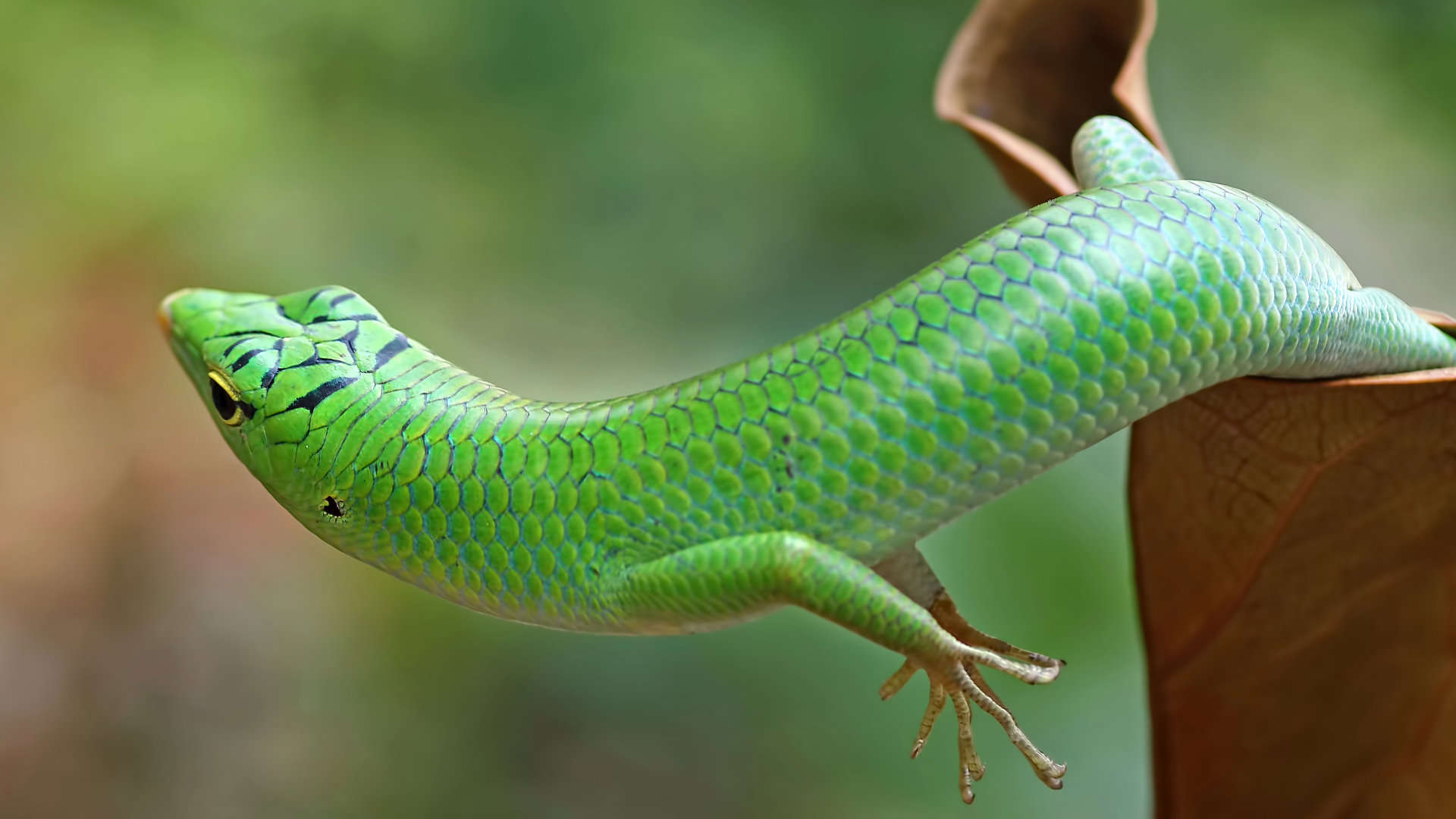
Lamprolepis smaragdina
Basic Information:
The Emerald Tree Skink is a slender, brilliant green arboreal lizard native to the tropical rainforests, mangrove swamps, and coastal palms of the Indo-Pacific region, including the Philippines, Indonesia, New Guinea, and the Solomon Islands. True to their name, these skinks are celebrated for their vivid, glossy emerald-to-lime-green coloration, which helps them blend seamlessly into high forest canopies (though some island localities display turquoise, yellow, or olive tones). Adults reach a manageable size of 8 to 10 inches in total length, with their long, prehensile-tipped tails making up more than half of that measurement.
These lizards are strictly diurnal, spending daylight hours actively foraging, basking on sunlit branches, and darting across trunks with exceptional agility. Unlike many shy, secretive reptiles, Emerald Tree Skinks are famously bold, inquisitive, and intelligent. Captive-bred individuals frequently exhibit puppy-dog curiosity, readily approaching enclosure doors, interacting with their keepers, and readily accepting food directly from hands or tongs.
Lifespan:
10–15+ years in captivity with proper care.
Sexing:
Sexing mature Emerald Tree Skinks can be done by examining the underside near the vent. Males possess enlarged, yellowish femoral/preanal pores and two distinct, enlarged post-anal scales (along with slight hemipenal bulges at the base of the tail). Females lack these enlarged scales, show indistinct pores, and tend to have a slightly more slender head profile.
Enclosure:
Juveniles: Minimum size of 12x12x18 inches or 18x18x24 inches.
Adult (Single or Pair): Minimum enclosure size of 18x18x36 inches or 24x18x36 inches, with vertical height prioritized over floor space. Highly active arboreal climbers, they thrive in larger enclosures (such as 36x18x36 inches) packed with vertical climbing branches, thick cork bark tubes, vines, and lush live plants (such as Ficus, Pothos, and Sansevieria). Ensure good cross-ventilation with a secure screen top.
Substrate:
A bioactive tropical substrate layer consisting of coconut fiber, ABG mix, or organic topsoil over a drainage layer (hydroton clay balls separated by mesh screening). Cover the substrate completely with a dense layer of magnolia or oak leaf litter and live moss to prevent frogs from ingesting loose dirt particles when striking prey.
Lighting & Temperature:
Basking Spot: 92°F–98°F (Provided via an overhead halogen or incandescent basking lamp focused on a sturdy climbing branch or cork flat in the upper third of the enclosure).
Ambient Temperature: 80°F–85°F
Cool Side: 74°F–78°F (Nighttime temperatures can safely drop to 70°F–75°F).
Lighting & UVB: High-quality linear UVB is mandatory for this sun-loving diurnal species. Provide a 5.0 to 6% (or forest-level T5 HO) linear UVB bulb spanning at least two-thirds of the enclosure, running alongside basking lights on a 12-hour day/night cycle.
Humidity:
70%–80%. Humidity should remain high but not stagnant. Heavy daily morning and evening mistings will boost humidity, allow for natural drinking behavior, and let the enclosure dry out slightly to around 60% during midday.
Food:
Omnivorous (heavily Insectivorous). Feed a varied diet:
Insects (80%–85%): Appropriately sized gut-loaded crickets, small dubia roaches, silkworms, black soldier fly larvae, and occasional waxworms or hornworms fed every 1–2 days for juveniles, and 3–4 times weekly for adults. Dust insects with calcium containing D3 at most feedings and a multivitamin once per week.
Fruit & Nectar (15%–20%): High-grade commercial crested gecko diet, mashed organic bananas, figs, or pureed papaya offered 1–2 times per week in small feeding ledges.
Water:
Emerald Tree Skinks prefer to lap up clean water droplets directly from broad leaves and glass surfaces following regular mistings. However, a small elevated water dish or waterfall should also be provided and refreshed with dechlorinated water daily.
Emerald Tree Skinks are among the most engaging, interactive, and visually stunning lizards in the hobby. Their high intelligence, vivid coloration, and eager-to-interact nature make them look and behave like miniature green monkeys, offering an exceptionally rewarding experience for keepers of all levels.
Where Can I find emerald tree skinks near me?
If you're in Frederick County, Maryland, visit Critters, Reptiles & Exotics in Frederick to check availability of Emerald Tree Skinks and get expert guidance on tall arboreal vivarium builds, high-output UVB lighting, and balanced omnivorous diets. Whether you're seeking your first handleable pet lizard or designing an elaborate planted display, there’s always a new adventure waiting at Critters, Reptiles & Exotics!