

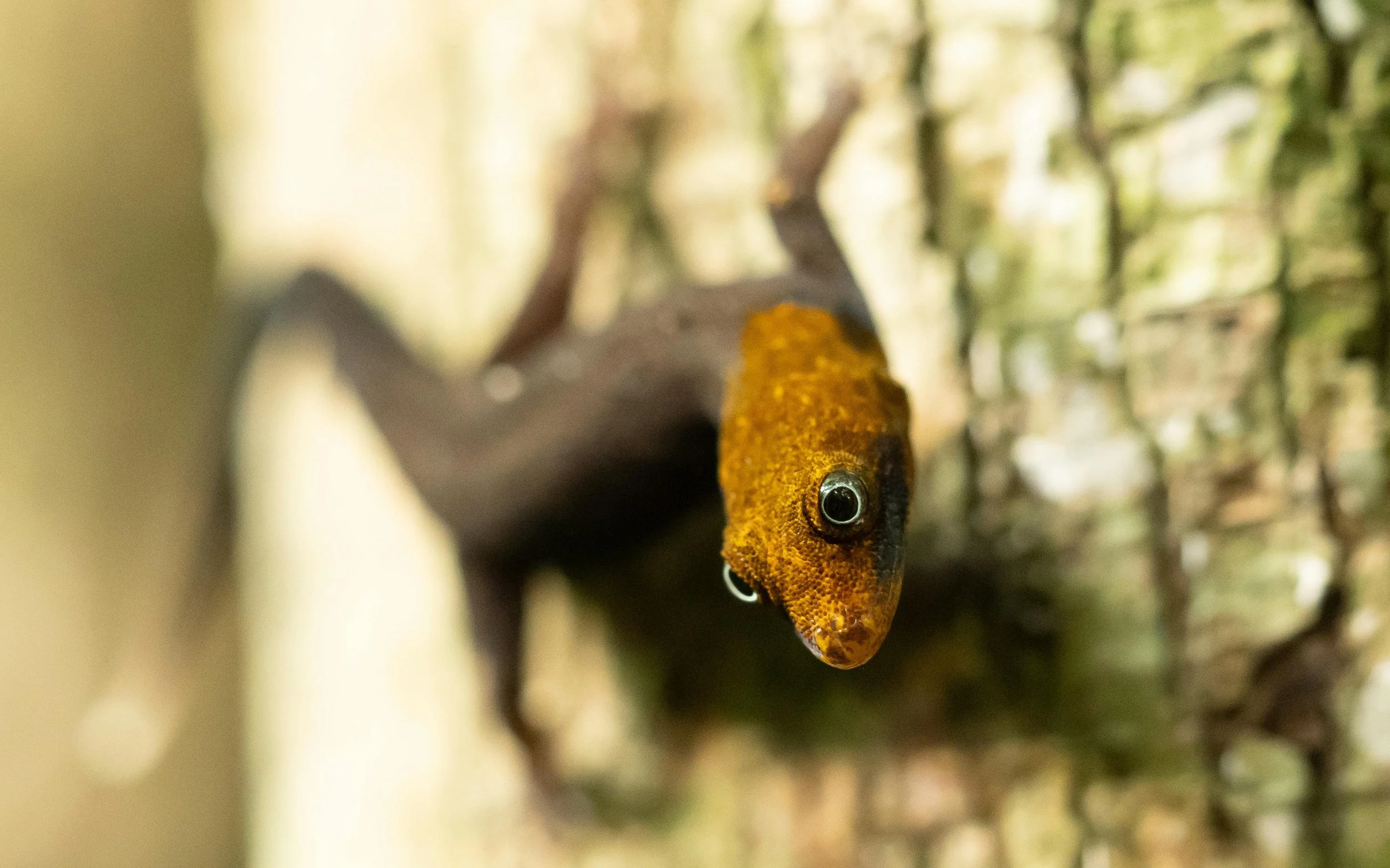
Dwarf YEllow-Headed Gecko
Gonatodes albogularis
Basic Information:
The Dwarf Yellow-Headed Gecko is a small, diurnal gecko species native to tropical regions of Central and South America, including countries like Colombia and Venezuela. Males are especially eye-catching, displaying bright yellow heads with contrasting darker bodies, while females are more subdued in coloration. Adults typically reach 3–4 inches in total length.
Unlike many commonly kept geckos, this species is active during the day and relies heavily on sight to hunt small insects. They are quick, alert, and somewhat shy, making them better suited as display animals rather than for handling. Their small size and vibrant coloration make them a great addition to naturalistic or bioactive setups.
Lifespan:
5–8 years in captivity with proper care.
Sexing:
Sexing is relatively easy in this species.
• Males have bright yellow heads and more vibrant coloration.
• Females are duller in color and lack the bold head pattern.
Enclosure:
• Juveniles: 12” x 12” x 12” enclosure minimum.
• Adults: 12” x 12” x 18” or larger (height is beneficial).
Provide a well-planted, vertically oriented enclosure with plenty of branches, cork bark, and hiding spots. Dense foliage helps reduce stress and encourages natural behavior.
Substrate:
A humidity-retaining, natural substrate is ideal, such as:
• Coconut fiber
• Organic topsoil mixes
• Bioactive substrates with leaf litter
These substrates help maintain humidity and support microfauna in bioactive setups.
Lighting & Temperature:
• Basking Spot: 82–86°F
• Ambient Temperature: 75–80°F
• Cool Side: 72–75°F
• UVB Lighting: Recommended (5.0) with a 10–12 hour light cycle.
As a diurnal species, access to proper lighting is important for overall health and activity.
Humidity:
Maintain 60–80% humidity with regular misting. Allow slight drying between mistings to prevent overly saturated conditions.
Food:
Dwarf Yellow-Headed Geckos are insectivorous.
• Feed small insects such as fruit flies, pinhead crickets, and small roaches.
• Juveniles should be fed daily.
• Adults typically eat every other day.
Prey should be appropriately sized due to their small mouths.
Water:
Provide water through regular misting, as they will drink droplets from leaves and enclosure surfaces. A small water dish can be included but may not be heavily used.
Supplementation:
Calcium without D3: Dust food 3–4 times weekly.
Calcium with D3: Use once a week if adequate UVB lighting is provided.
Multivitamins with D3: Offer once monthly in place of the Calcium with D3 to support overall health.
Dwarf Yellow-Headed Geckos are a great choice for keepers looking for a small, colorful, and active display reptile. Their daytime activity and striking coloration make them especially engaging in well-planted, naturalistic enclosures.
Where Can I Buy a Dwarf Yellow-Headed Gecko Near Me?
If you're in Washington County, Maryland, it’s just a short drive to Critters, Reptiles & Exotics in Frederick, where you can check availability of Dwarf Yellow-Headed Geckos and get expert advice on bioactive setups, lighting, and care. Whether you're building a planted enclosure or adding a unique species, there’s always a new adventure waiting at Critters, Reptiles & Exotics!