

Caring for your Camel Spider
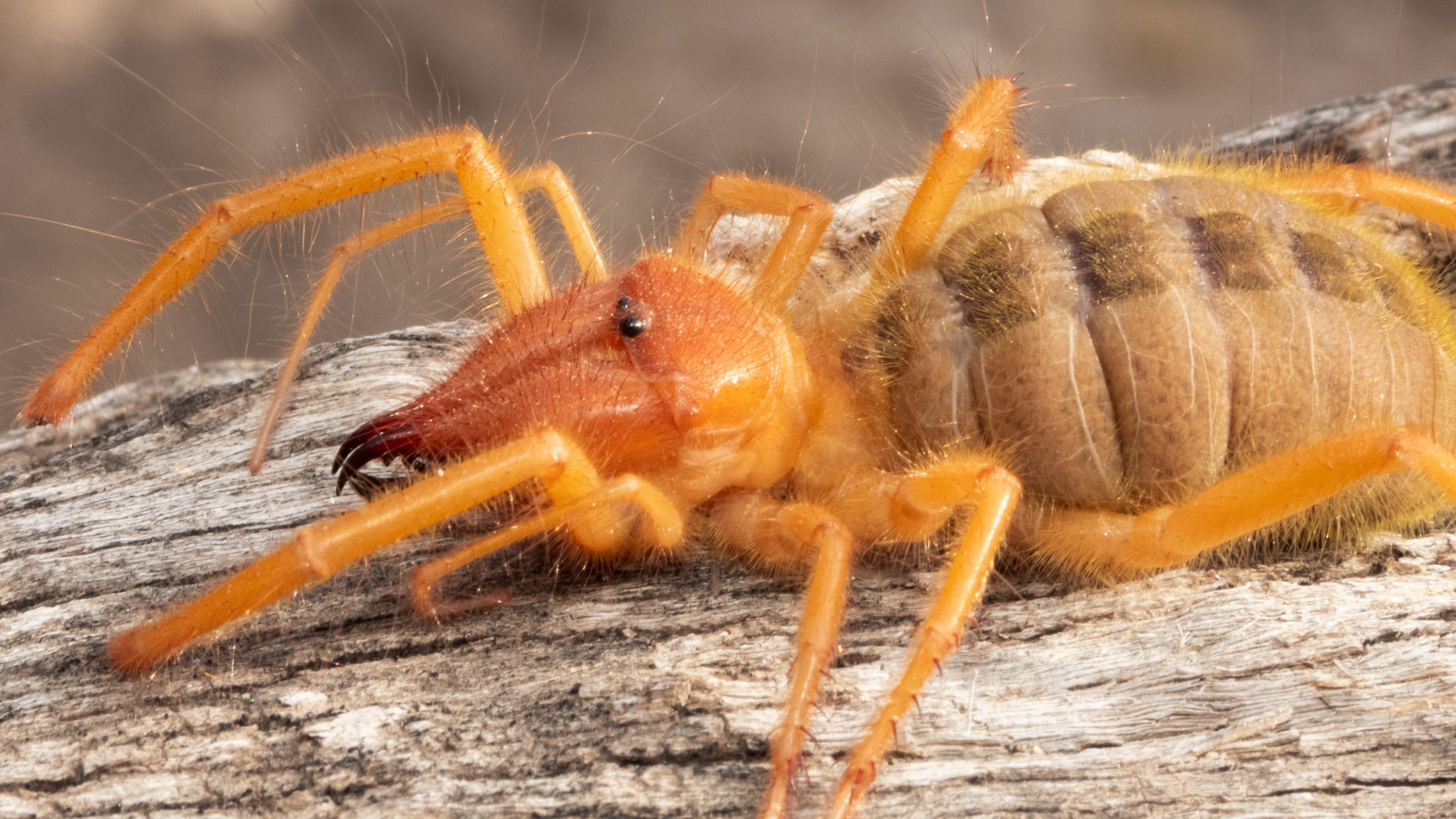
Camel Spider
(Solifugae spp.)
Basic Information:
Camel Spiders, also known as Wind Scorpions or Sun Spiders, are fast-moving arachnids found in arid regions around the world, including the Middle East, Africa, and parts of United States. Despite their name, they are neither true spiders nor scorpions but belong to their own unique order, Solifugae. Adults typically range from 2–6 inches in leg span depending on species.
They are nocturnal, highly active predators known for their speed and strong feeding response. Camel Spiders do not produce venom dangerous to humans, but they have powerful jaws (chelicerae) capable of delivering a painful bite. Due to their speed and defensive nature, they are best suited as display animals for experienced keepers.
Lifespan:
1–3 years in captivity with proper care.
Sexing:
Sexing is difficult and typically determined by experienced keepers.
• Males are often more slender with longer legs
• Females tend to be larger-bodied
Enclosure:
• Juveniles: Small secure enclosure or critter keeper
• Adults: 5–10 gallon enclosure or larger
Provide a well-ventilated, escape-proof enclosure with a tight-fitting lid. Include hides such as cork bark, rocks, or artificial burrows. These animals require secure setups due to their speed and strength.
Substrate:
A dry, desert-style substrate is ideal, such as:
• Sand/topsoil mix
• Play sand
• Arid bioactive substrate
Provide enough depth for shallow burrowing and hiding.
Lighting & Temperature:
• Basking Spot: Not required
• Ambient Temperature: 75–85°F
• Cool Side: 70–75°F
• UVB Lighting: Not required. Provide a natural day/night cycle
Avoid excessive humidity and maintain warm, stable conditions.
Humidity:
Maintain low humidity (20–40%). These animals are adapted to dry environments and do not tolerate excessive moisture.
Food:
Camel Spiders are carnivorous and aggressive hunters.
• Feed live insects such as crickets, roaches, and mealworms
• Juveniles should be fed more frequently
• Adults typically eat several times per week
They have a strong feeding response and will actively chase prey.
Water:
Provide a small, shallow water dish or offer occasional light misting. Avoid overly wet conditions, as excess moisture can be harmful.
Camel Spiders are fascinating for keepers interested in fast, active, and unusual arachnids. Their speed, hunting behavior, and unique appearance make them an exciting display species for experienced hobbyists.
Where Can I Buy a Camel Spider Near Me?
If you're in Adams County, Pennsylvania, it’s just a short drive to Critters, Reptiles & Exotics in Frederick, Maryland, where you can check availability of Camel Spiders and get expert advice on enclosure setup and care. Whether you're exploring unique invertebrates or expanding your collection, there’s always a new adventure waiting at Critters, Reptiles & Exotics!