

Caring for your Hermit Crab
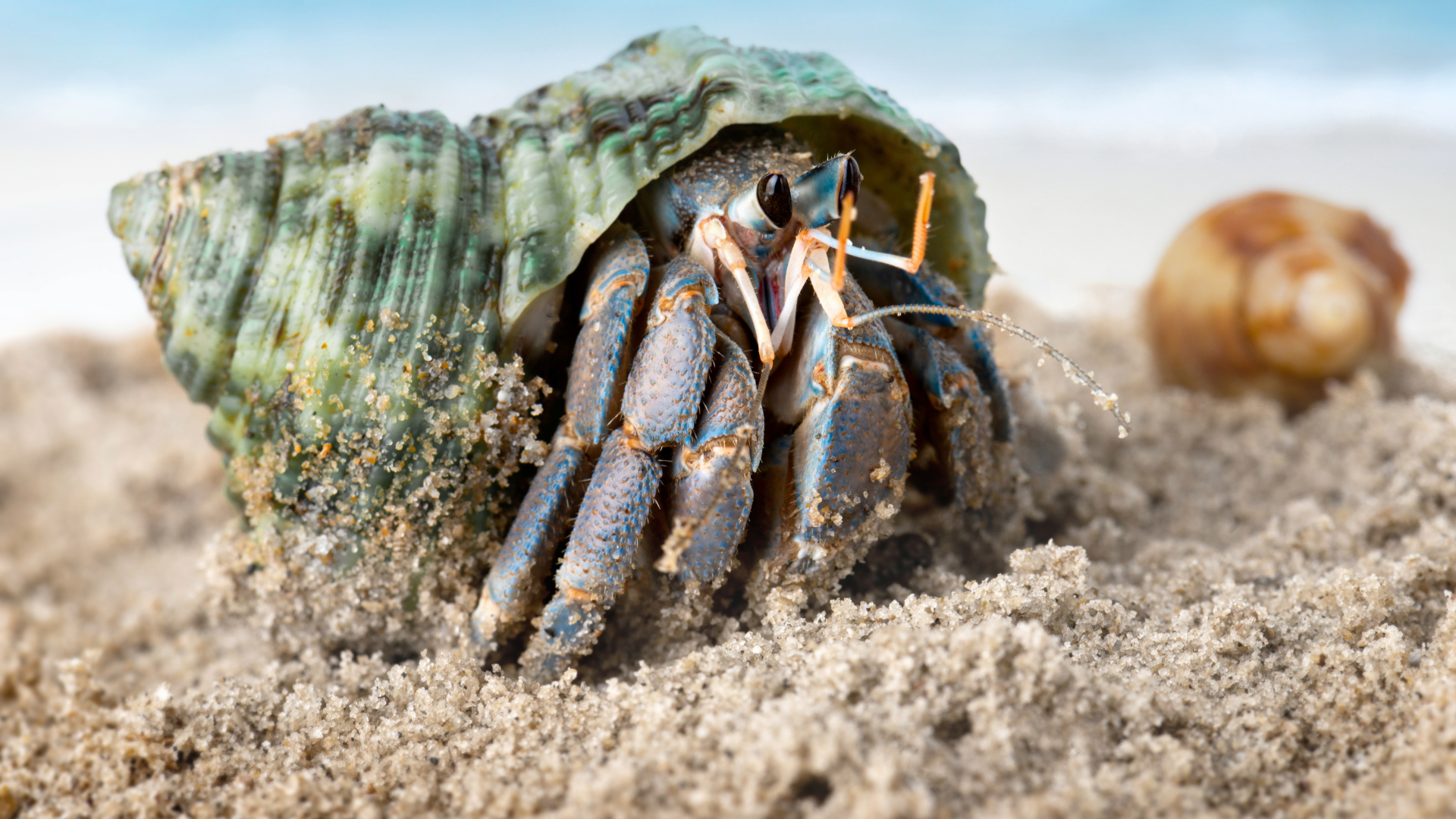
Hermit Crab
(Coenobita spp.)
Basic Information:
Hermit Crabs are small, social crustaceans found in tropical coastal regions around the world, including areas of Ecuador and the Caribbean. Unlike true crabs, they do not produce their own shells and must find and change into new shells as they grow. Adults typically range from 1–4 inches depending on species.
Hermit crabs are primarily nocturnal and spend much of their time exploring, climbing, digging, and interacting with their environment. They are highly social animals that should always be kept in groups. While often marketed as simple pets, they require specific humidity, substrate, and environmental conditions to truly thrive.
Lifespan:
10–20+ years in captivity with proper care
Sexing:
Sexing is difficult and typically not necessary for general care.
• Can be determined by examining the underside of the abdomen
• Not commonly done outside of breeding situations
Enclosure:
• Minimum: 10-gallon enclosure for a small group
• Recommended: 20-gallon or larger for proper colony setup
Provide a secure enclosure with a tight-fitting lid to maintain humidity. Include climbing structures, hides, and enrichment such as driftwood, cork bark, and décor.
Substrate:
A deep, moisture-retaining substrate is critical, such as:
• Sand and coconut fiber mix (5:1 ratio recommended)
• Substrate depth should be at least 6 inches
This allows for proper burrowing and molting behavior, which is essential for survival.
Lighting & Temperature:
• Ambient Temperature: 75–85°F
• Cool Side: 72–75°F
• UVB Lighting: Not required but can be beneficial
• Provide a consistent 10–12 hour light cycle
Stable warmth is important for activity and metabolism.
Humidity:
Maintain high humidity (70–85%).
This is critical for proper breathing, as hermit crabs use modified gills and require moist air.
Food:
Hermit crabs are omnivorous scavengers.
• Offer a varied diet including fruits, vegetables, proteins, and calcium sources
• Commercial hermit crab diets can be used but should be supplemented with fresh foods
Variety is key to long-term health.
Water:
Provide two water sources at all times:
• Freshwater (dechlorinated)
• Saltwater (marine-grade salt mix)
Both dishes should be deep enough for the crabs to fully submerge if desired.
Shells:
Provide multiple extra shells of appropriate size and shape.
Hermit crabs will change shells as they grow, and lack of proper options can lead to stress or fighting.
Hermit crabs are fascinating, social animals with unique behaviors like shell swapping and burrowing. When properly cared for, they are long-lived and highly engaging, especially in well-designed, naturalistic enclosures.
Is There a Local Pet Store Selling Hermit Crabs Near Me?
If you're in Loudoun County, Virginia, it’s just a short drive to Critters, Reptiles & Exotics in Frederick, Maryland, where you can check availability of Hermit Crabs and get expert advice on substrate, humidity, and colony setup. Whether you're starting your first crabitat or upgrading your enclosure, there’s always a new adventure waiting at Critters, Reptiles & Exotics!