

Caring for your Yellow Sipaliwini Dart Frog
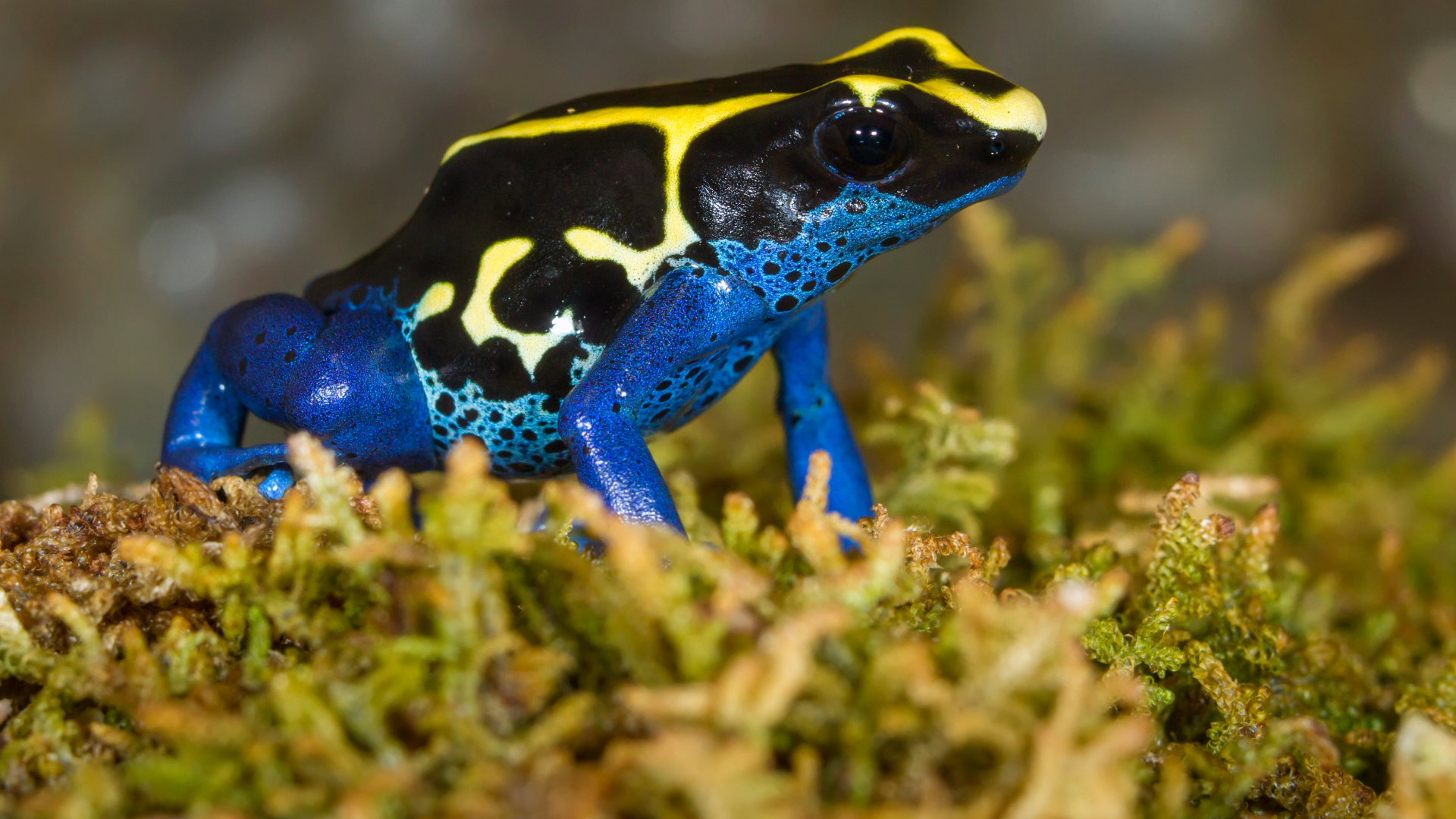
Yellow Sipaliwini Dart Frog
(Dendrobates tinctorius “Sipaliwini”)
Basic Information:
The Yellow Sipaliwini Dart Frog is a striking locality of Dendrobates tinctorius native to the Sipaliwini region of Suriname. This morph is known for its bright yellow body with contrasting black patterning, making it one of the more eye-catching dart frogs in the hobby. Adults typically reach 1.5–2 inches in length.
These frogs are diurnal, active, and bold compared to many amphibians, often seen exploring their environment during the day. Like other dart frogs, they are non-toxic in captivity due to their controlled diet. They are best kept in well-maintained, planted enclosures and are ideal for display-focused setups.
Lifespan:
10–15 years in captivity with proper care
Sexing:
Sexing can be determined with experience.
• Females are typically larger and more robust
• Males are smaller and may be more vocal during breeding
Enclosure:
• Juveniles: 10-gallon enclosure
• Adults: 18” x 18” x 18” or larger for a pair or small group
Provide a vertically oriented, planted enclosure with plenty of leaf litter, cork bark, and hiding areas. Bioactive setups are strongly recommended for long-term success.
Substrate:
ABG mix (or similar) layered with leaf litter and sphagnum moss
Well-draining with a false bottom to prevent standing water
Maintains high humidity without being soggy
Lighting & Temperature:
A high-humidity, bioactive substrate is ideal, such as:
• ABG mix
• Organic topsoil blends with leaf litter
• Moss layers for moisture retentionThese substrates help maintain humidity and support microfauna like springtails and isopods.
Humidity:
Maintain high humidity (80–100%).
Regular misting or an automated misting system is recommended to keep the enclosure consistently moist.
Food:
Yellow Sipaliwini Dart Frogs are insectivorous.
• Primary diet: fruit flies (Drosophila spp.)
• Supplemental foods: springtails and other small microfauna.
Feed small amounts daily or every other day depending on age and activity.
Supplementation:
Calcium without D3: Dust food 3–4 times weekly.
Calcium with D3: Use once a week if UVB lighting is provided.
Multivitamins: Offer once monthly to support overall health.
Water:
Provide clean, dechlorinated water through misting and small water features. These frogs absorb moisture through their skin and do not require standing water but may use shallow pools.
Yellow Sipaliwini Dart Frogs are vibrant, active, and highly visible, making them an excellent choice for display terrariums. Their bold coloration and daytime activity provide constant interest in a well-designed bioactive enclosure.
Where Can I Buy Yellow Sipaliwini Dart Frogs Near Me?
If you're in Washington County, Maryland, it’s just a short drive to Critters, Reptiles & Exotics in Frederick, where you can check availability of Yellow Sipaliwini Dart Frogs and get expert advice on bioactive setups, humidity control, and feeding. Whether you're building a tropical enclosure or expanding your collection, there’s always a new adventure waiting at Critters, Reptiles & Exotics!