

Caring for your Vampire Crab
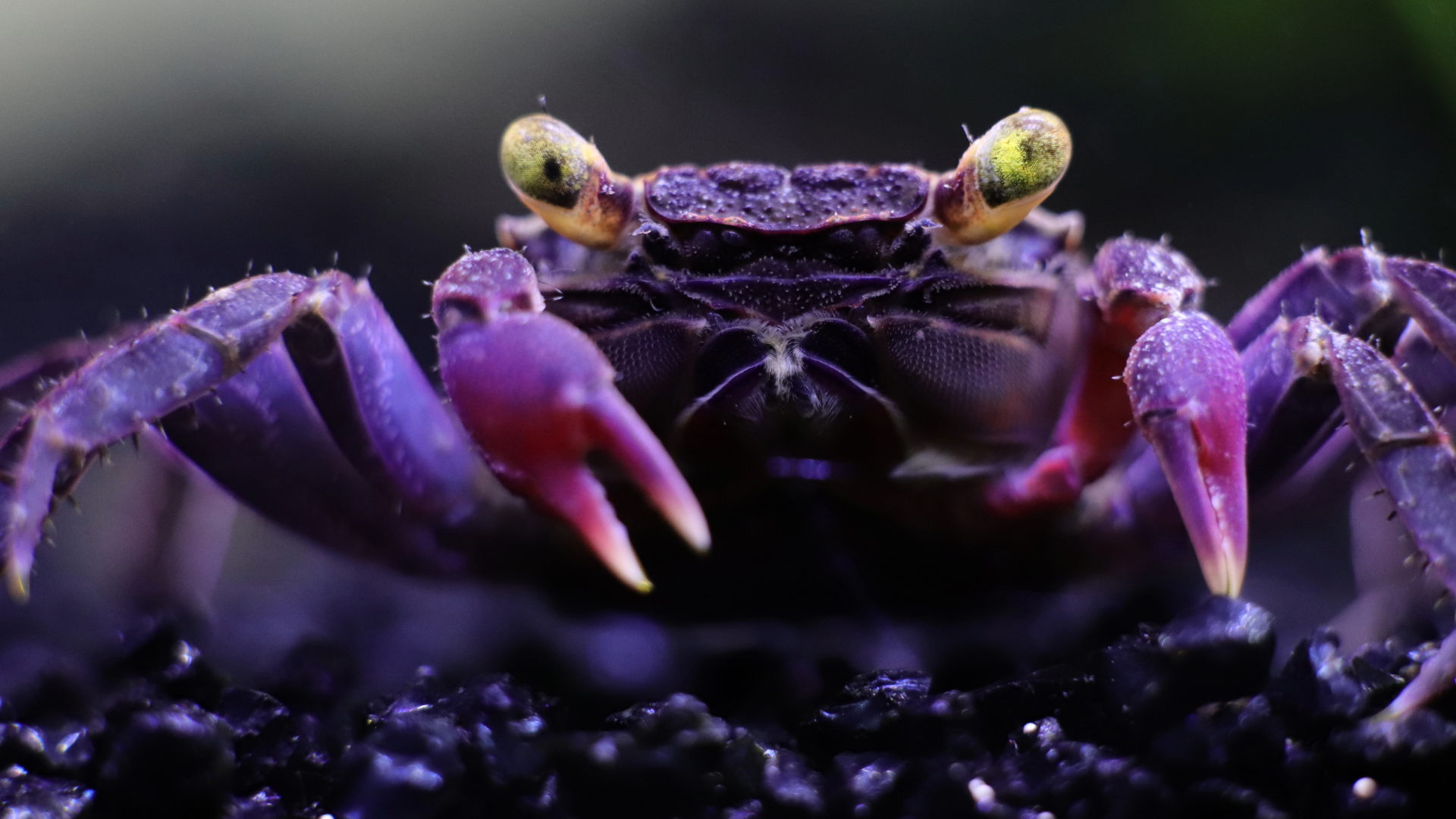
Vampire Crab
(Geosesarma sp.)
Basic Information:
Purple Vampire Crabs are small, brilliantly colored semi-terrestrial crabs native to the tropical forests and riverbanks of Indonesia and Southeast Asia. Despite their vivid purple bodies and bright yellow eyes, they remain tiny. They are primarily terrestrial, spending most of their time on land but requiring a shallow freshwater pool for drinking, humidity, and occasional soaking. Active during dusk and nighttime (crepuscular/nocturnal), they are fascinating, bold, and social when kept in small groups.
Lifespan:
2-3 years in captivity with proper husbandry.
Sexing:
Flip the crab gently to observe the underside:
Males have a narrow, pointed abdominal flap.
Females have a wide, rounded flap used for carrying eggs.
Sexing becomes easier once crabs reach adult size.
Size:
Adults generally reach 1–1.5 inches across the carapace
Enclosure:
Minimum: 10–20 gallon tank for a colony of 4–6 crabs.
Provide:
70–80% land area
20–30% freshwater area (very shallow)
Moss, cork bark, leaf litter, and hiding places
Vertical structures for climbing
A secure lid is mandatory—they climb extremely well.
Substrate:
Use a moisture-retaining tropical mix such as:
Coconut fiber
Soil
Leaf litter
Sphagnum moss
Substrate should remain damp (not soaked) to maintain high humidity and support burrowing.
Lighting & Temperature:
Ambient Temperature: 72-82°F
No special lighting required; avoid direct sunlight or heat sources
Humidity:
High humidity preferred, around 80-95%
Daily misting is typically required unless the enclosure is bioactive.
Food:
Purple Vampire Crabs are omnivores.
Offer a varied diet including:
Fish flakes or pellets
Repashy gel foods (Soilent Green, Community Plus)
Leaf litter (essential for microfauna)
Freeze-dried insects
Small live insects such as isopods, springtails, or tiny crickets
Feed lightly 3–4× weekly to avoid fouling the enclosure.
Handling:
Do not handle Vampire Crabs—handling causes stress and they are escape-prone. They thrive best in groups, but provide plenty of hides to minimize territorial disputes. Watching their natural climbing, hunting, and social behaviors is their primary enrichment.
Colorful, active, and surprisingly personable, Purple Vampire Crabs make outstanding display pets for naturalistic, tropical terrariums. Their unique land–water lifestyle and bold personality make them a great choice for keepers who enjoy planted or bioactive setups with visually striking invertebrates.
If I am traveling through Maryland, where can I get some Vampire Crabs?
If you're visiting from Fairfax County, Virginia, stop by Critters, Reptiles & Exotics in Frederick, Maryland to check availability and pick up everything you need for a thriving Vampire Crab colony. There’s always a new adventure waiting at Critters, Reptiles & Exotics!