

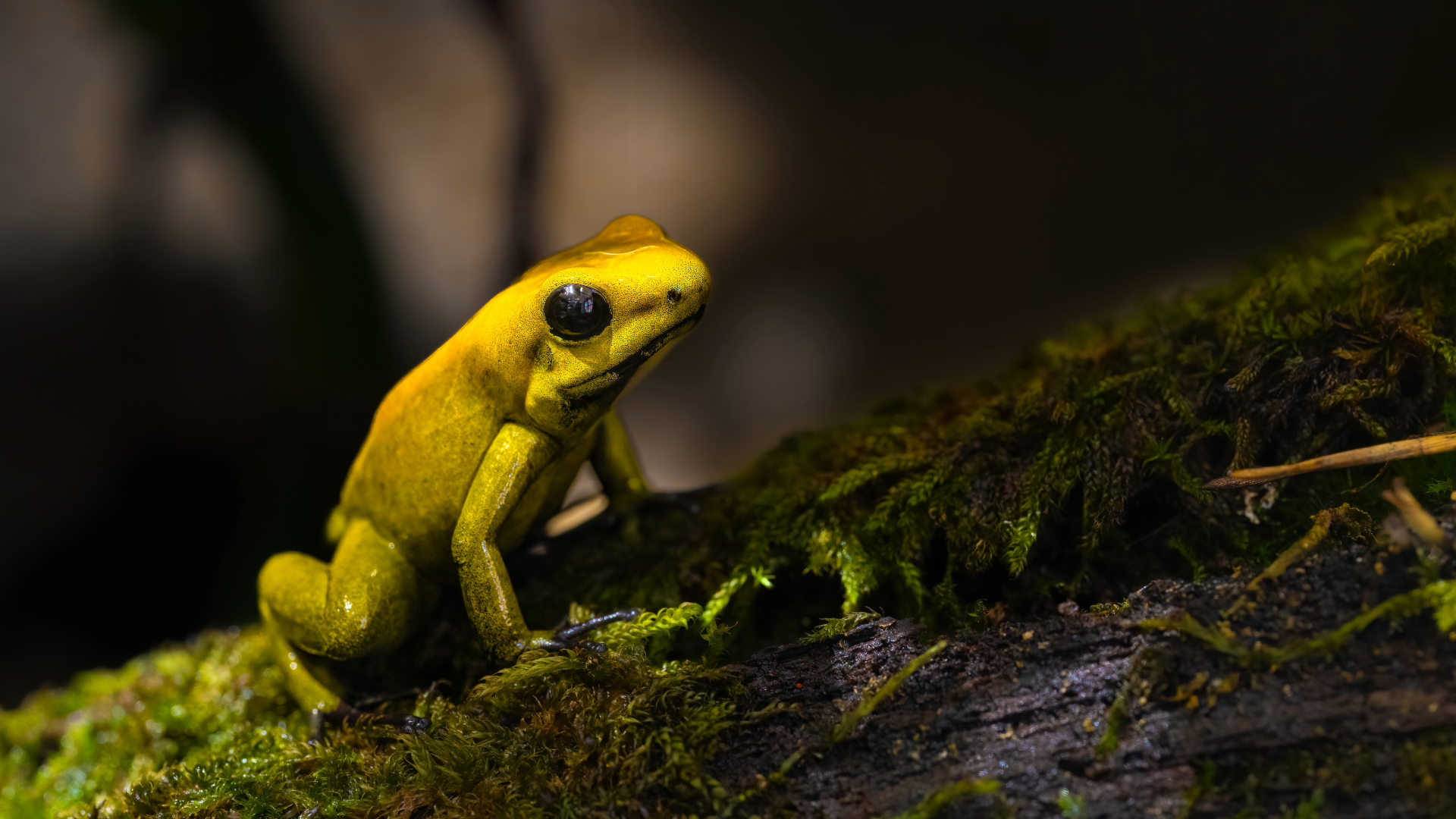
Phyllobates Bicolor "Uraba" Dart Frog
Phyllobates bicolor
Basic Information:
The Black-Legged Poison Frog (Phyllobates bicolor), also known as the yellow-legged poison frog or bicolor poison dart frog, is a vibrant species of poison dart frog native to the lowland rainforests and humid cloud forests of the Chocó region in western Colombia. Adults are medium-to-large dart frogs, typically reaching 1.4 to 2 inches (3.5 to 5 cm) in length, with females usually being slightly larger and heavy-bodied than males. They feature striking bright yellow, golden, or orange bodies contrasted with dark black or deep blue-black legs and forelimbs.
These frogs are strictly diurnal, meaning they are most active during daylight hours, spending their time foraging along the forest floor and climbing low foliage. In the wild, Phyllobates bicolor is renowned as the second most toxic wild poison dart frog species, accumulating potent alkaloid toxins such as batrachotoxin from their wild diet of specialized ants and beetles. However, captive-bred specimens raised on standard feeder insects are completely non-toxic and safe to keep. They possess an exceptionally bold, curious, and active temperament, making them far less secretive than many other dart frog species, and mature males produce a loud, pleasant trilling call.
Lifespan:
10 to 15+ years in captivity with proper care, husbandry, and nutrition.
Sexing:
Sexing Phyllobates bicolor can be challenging until they reach sexual maturity around 10 to 14 months of age:
Males: Generally smaller and slighter in body build. Mature males vocalize regularly with loud, clear, trilling calls to establish territory and attract females.
Females: Noticeably larger, wider, and more pear-shaped when viewed from above, particularly when carrying eggs. Females do not produce mating calls.
Enclosure:
Juveniles: A 10-gallon glass terrarium (20" x 10" x 12") or equivalent bio-secure container.
Adults: A minimum an 18" x 18" x 24" front-opening glass vivarium for a small group of 2 to 4 adults. Provide ample ground floor surface area as well as low climbing structures, as they utilize both lower branches and terrarium space.
Setup: Set up as a tropical bioactive vivarium complete with non-toxic live plants (such as Bromeliads, Pothos, Marcgravia, and Philodendrons), cork bark flats and tubes, leaf litter, and secure hiding spots. Use an escape-proof, fine-mesh screen top to ensure adequate ventilation while maintaining proper humidity.
Substrate:
A multi-layered bioactive substrate system is essential to prevent waterlogging:
Drainage Layer: 1 to 2 inches of expanded clay pebbles (LECA) or Matala matting topped with a fine mesh substrate barrier.
Substrate Layer: 2 to 3 inches of tropical bioactive substrate mix (ABG mix consisting of coconut coir, tree fern fiber, orchid bark, sphagnum moss, and charcoal).
Top Layer: A continuous, thick layer of dried leaf litter (such as Live Oak or Indian Almond leaves). Leaf litter is mandatory as it protects sensitive frog skin from dirt, harbors micro-fauna (springtails and isopods), and provides natural micro-hides.
Lighting & Temperature:
Include:
Basking Spot: Not required or recommended. Intense spotlighting can quickly overheat the enclosure and cause fatal desiccation.
Cool Side / Ambient Temperature: Maintain ambient day temperatures between 70°F and 75°F. Nighttime temperatures can safely drop to 65°F to 68°F. Temperatures exceeding 80°F are dangerous and can be fatal to dart frogs.
UVB Lighting Requirements: Low-level UVB (such as a 2.0 or 5.0 ShadeDweller T5 bulb) combined with full-spectrum LED plant lighting is highly recommended for plant growth and Vitamin D3 synthesis.
Lighting Schedule: 12 hours on / 12 hours off photoperiod managed via an automated timer.
Humidity:
Maintain relative ambient humidity between 70% and 100%. Light misting once or twice daily using an automated misting system or hand mister is required to keep plants, substrate, and leaf litter consistently damp (never soggy or waterlogged). Ensure balanced ventilation to prevent completely stagnant air.
Food:
Phyllobates bicolor are micro-predators that require small, live, gut-loaded feeder insects:
Primary Diet: Flightless fruit flies (Drosophila melanogaster for juveniles/subadults and Drosophila hydei for adults), supplemented with springtails, dwarf isopods, and pinhead crickets.
Supplements: Dust feeder insects with high-quality calcium powder with Vitamin D3 at almost every feeding, and a complete reptile/amphibian multivitamin (with Vitamin A) once every 1 to 2 weeks.
Water:
Provide a very shallow water dish or natural leaf-cup water reservoir containing fresh dechlorinated, reverse osmosis (RO), or distilled water. Dart frogs cannot swim well and can drown in deep water—ensure the water level does not exceed chin depth (under 0.5 inches). Never use untreated tap water, as chlorine and heavy metals pass easily through amphibian skin.
Phyllobates bicolor are among the boldest, most rewarding poison dart frogs to keep in captivity. Their striking contrast of bright yellow-orange bodies and dark limbs makes them spectacular display animals. Because they are diurnal, highly confident, and active, they spend much of their day out in the open exploring their vivarium rather than hiding. Combined with the pleasant, bird-like calling of mature males and their long lifespan, they make ideal captives for both novice and experienced terrarium hobbyists.
Is There a Local Pet Store Selling Black-Legged Poison Dart Frogs Near Me?
If you're in Montgomery County, Maryland, it’s just a short drive to Critters, Reptiles & Exotics in Frederick, where you can check availability of Black-Legged Poison Dart Frogs—including captive-bred specimens—and get expert advice on bioactive vivarium setup, humidity control, and feeding schedules. Whether you're new to tropical dart frogs or expanding your bioactive collection, there’s always a new adventure waiting at Critters, Reptiles & Exotics!