

Caring for your Sugar Glider
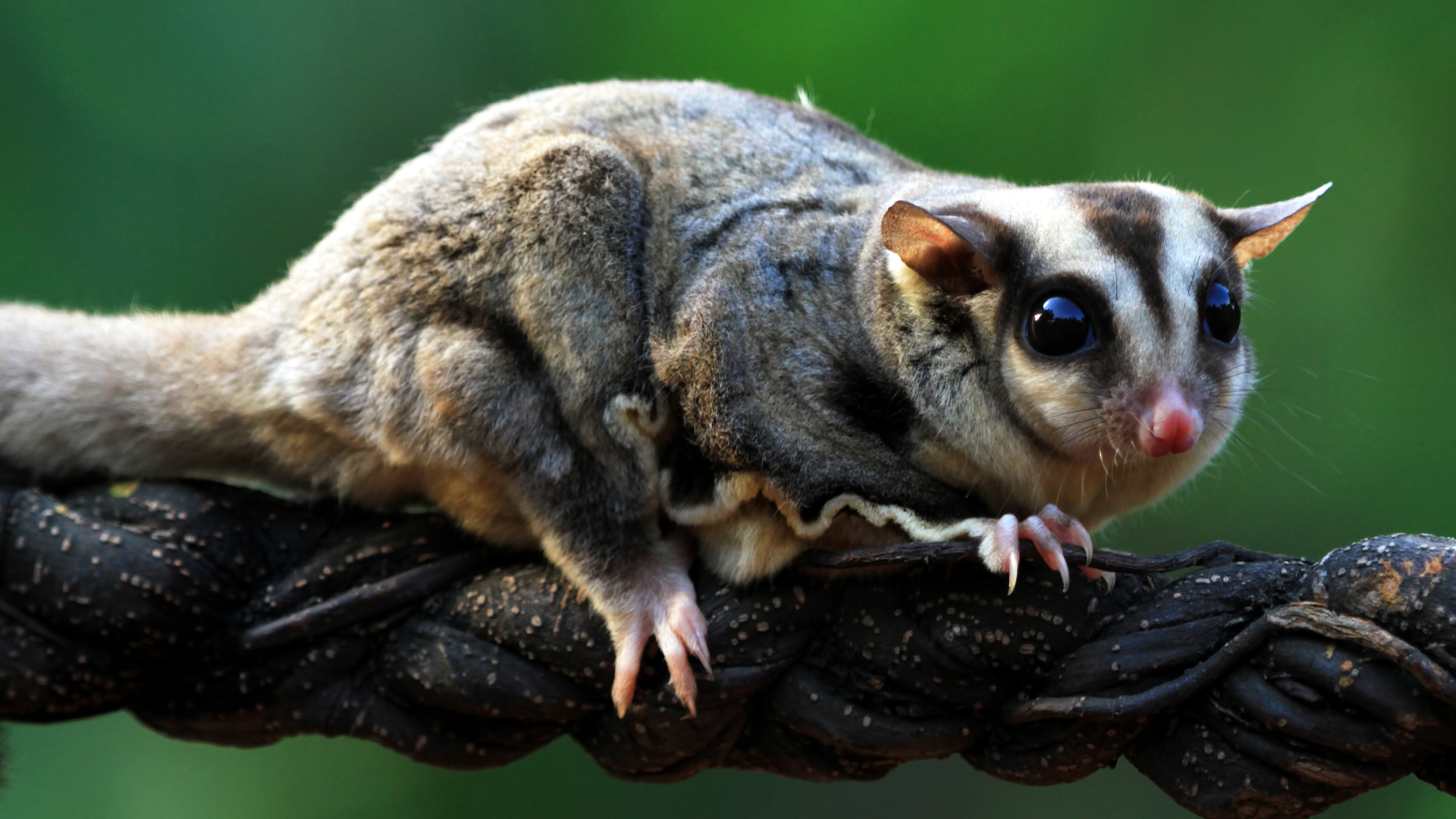
Sugar Glider
(Petaurus breviceps)
Basic Information:
Sugar Gliders are small, nocturnal marsupials native to Australia, Tasmania, Indonesia, and Papua New Guinea. They are named for their love of sweet nectars and their ability to glide between trees using a membrane (patagium) stretching from wrist to ankle. Adults typically weigh 3–5 ounces and measure 5–7 inches in body length, with an additional long, semi-prehensile tail. Highly social and extremely active, they thrive in groups and require significant interaction, enrichment, and climbing space to remain healthy and happy.
Lifespan:
10–15 years in captivity with proper care.
Sexing:
Males have a visible scent gland on the forehead (“bald spot”) and often a chest gland.
Females have a pouch for raising joeys.
Both sexes are easily distinguished once mature
Enclosure:
Minimum: 24” x 24” x 36”, but larger is always better.
Vertical climbing space is essential.
Provide branches, ropes, wheels (no center bars), pouches, and hideouts.
Sugar gliders must be kept in pairs or groups — solitary housing leads to stress and health decline.
Bedding/Liners:
Use paper-based bedding or kiln-dried aspen shavings. Avoid cedar or pine as their oils can cause respiratory issues. Spot clean daily and replace bedding weekly.
Lighting & Temperature:
Ambient Temperature: Keep between 60-70°F consistently.
Keep in a cool, dry, well-ventilated area away from direct sunlight or drafts.
Food:
Sugar gliders are omnivores with a complex diet. Offer:
Approved sugar glider diet (BML, OHPW, etc.)
Fresh fruits
Fresh vegetables
Insects (mealworms, dubia roaches)
Avoid chocolate, caffeine, onion, garlic, and processed human foods.
Socialization:
Sugar gliders require daily social interaction.
Handle gently and consistently to build trust.
Provide a bonding pouch for contact during the day.
Offer safe toys, foraging items, and plenty of climbing opportunities.
Never house a sugar glider alone — loneliness can cause severe stress.
Lively, affectionate, and full of personality, sugar gliders make delightful companions for owners willing to commit to their social and environmental needs. Their playful antics and strong bonds with their humans make them incredibly rewarding pets.
Is a Sugar Glider something I can buy at a local pet store?
Pet stores require a USDA License to sell exotic pets like Sugar Gliders. If you're driving from Adams County, Pennsylvania, stop by Critters, Reptiles & Exotics in Frederick, Maryland to check availability and get expert guidance on proper glider diets, pairing, and enclosure setups. There’s always a new adventure waiting at Critters, Reptiles & Exotics!