

Caring for your Silver Ghost Rider Millipede
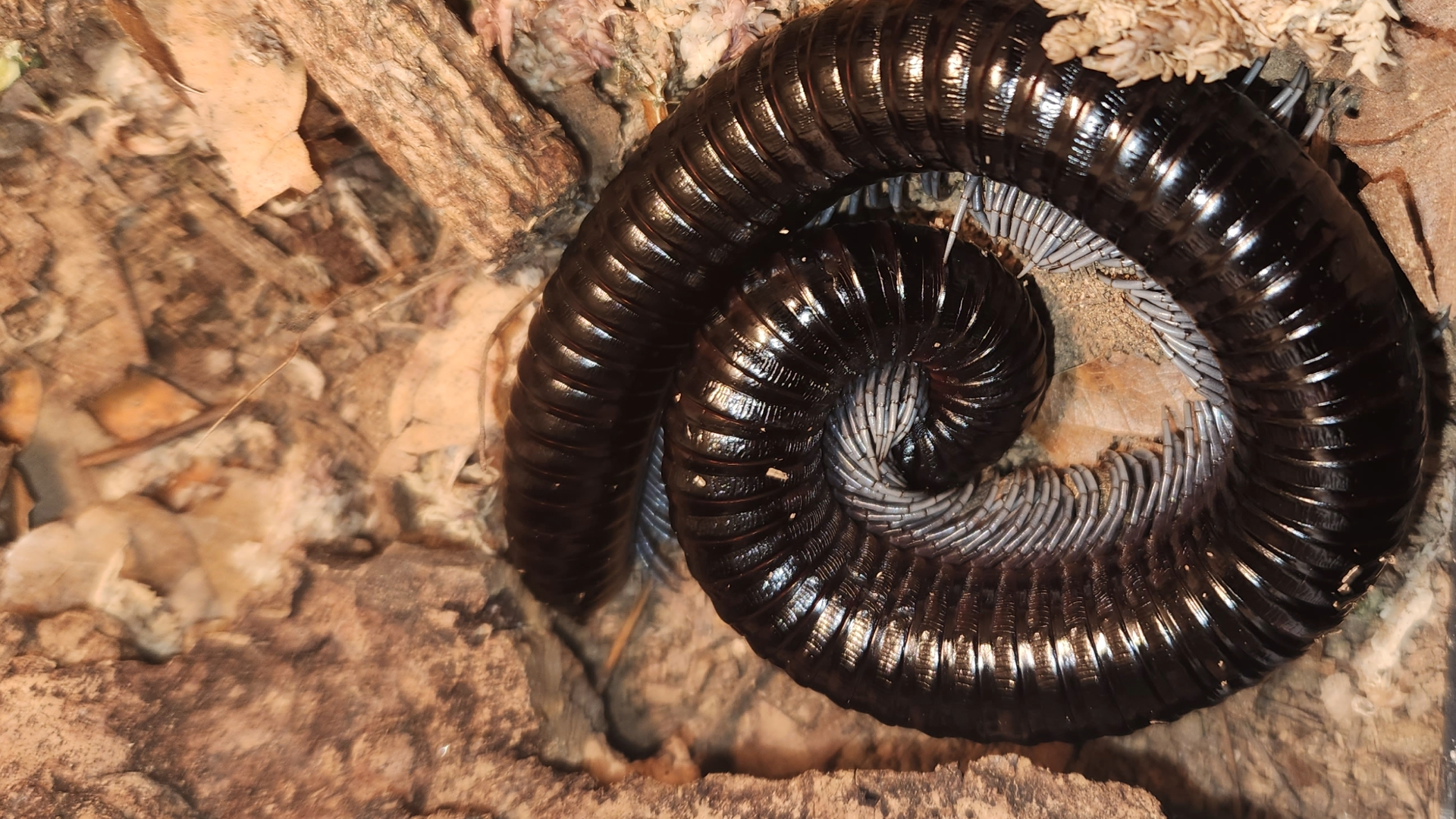
Spirostreptus sp. "Ghost Rider"
Basic Information:
The Silver Ghost Rider Millipede is a striking, relatively new species in the invertebrate hobby, originating from the tropical forest floors and leaf litter habitats of East Africa (primarily Tanzania). They are easily recognized by their metallic, silver-to-pewter banded exoskeleton, contrasting with dark segments and pale, delicate legs that move in a hypnotic wave as they crawl. Adults typically grow to a moderate size of 4–6 inches in length, featuring a smooth, cylindrical body that is slender and agile compared to larger giant African species.
These millipedes are primarily nocturnal and crepuscular, spending daylight hours burrowed beneath moist soil, decaying logs, and leaf litter before emerging in the evening to forage. When startled, they curl into a tight spiral to protect their soft underside and may secrete a harmless, pungent defensive fluid (defensive quinones). They are gentle, slow-moving detritivores that thrive in stable, humid environments, making them a standout species for invertebrate enthusiasts.
Lifespan:
3–5+ years in captivity.
Sexing:
Sex can be determined on subadult and adult specimens by examining the underside around the 7th body ring (segment). Mature males lack standard walking legs on this segment; instead, their legs are modified into specialized reproductive organs called gonopods, leaving a noticeable visual gap or recessed pocket. Females have a continuous, unbroken series of walking legs along their entire underside.
Enclosure:
Juvenile / Small Groups: A 2.5 to 5-gallon equivalent ventilated plastic terrarium or lidded plastic bin.
Adult / Colony (2–4 individuals): A standard 10-gallon glass tank or equivalent front-opening terrarium. Enclosures must be at least twice as long as the millipede's total length and provide plenty of vertical depth for substrate. A secure, latching screen or lidded enclosure with moderate ventilation is necessary to retain moisture without letting air stagnate.
Substrate:
A deep, specialized invertebrate substrate blend is the most vital element of their care, as it serves as both their primary home and main food source. Provide a 4–6 inch layer (the depth must be at least equal to the millipede's adult length) consisting of organic topsoil, decaying hardwood sawdust/chunks (oak, beech, maple), shredded decomposing hardwood leaf litter, and a pinch of calcium carbonate or limestone flour. Avoid coco fiber as a sole substrate (it has no nutritional value) and never use cedar, pine, or chemically treated wood/soil.
Lighting & Temperature:
Ambient Temperature: 72°F–78°F (Consistent room temperature is generally sufficient; use a low-wattage side-mounted heat mat on a thermostat if the room drops below 68°F).
Cool Side: 70°F–72°F
Lighting & UVB: No UVB required. Millipedes are light-sensitive and avoid bright illumination; keep them under ambient room lighting on a standard 12-hour day/night cycle.
Humidity:
75%–85%. The substrate must remain consistently moist throughout its depth, like a wrung-out sponge, without being soupy or waterlogged at the bottom. Daily or every-other-day gentle misting with dechlorinated water helps keep the top layer of moss and leaf litter damp.
Food:
Detritivores/Herbivores. Their primary nutrition comes directly from eating the decaying hardwood and decomposing leaf litter in their substrate. Offer supplemental foods once or twice a week:
Fresh Produce: Slices of cucumber, zucchini, squash, sweet potato, melon, and mushrooms (remove uneaten fresh food after 24–48 hours to avoid mold and fungus gnats).
Protein: Occasional dried shrimp, fish pellets, or insect jelly offered in small amounts every 1–2 weeks.
Calcium: High calcium is essential for healthy molting. Provide constant access to cuttlebone pieces or powder sprinkled over food and throughout the substrate.
Water:
Millipedes obtain nearly all of their water directly from their moist substrate, misting droplets, and high-water foods. However, a very shallow dish (like a bottle cap or shallow ceramic dish filled with clean stones or sphagnum moss to prevent accidental drowning) can be provided.
Silver Ghost Rider Millipedes are quiet, completely odor-free, and require minimal space. Their unique silver coloration makes them one of the most visually captivating millipede species to keep, and their calm, harmless nature makes them fascinating display animals for bioactive terrariums.
Where Can I get a Silver Ghost Rider Millipede Near Me?
If you're in Martinsburg, West Virginia, visit Critters, Reptiles & Exotics in Frederick to check availability of Silver Ghost Rider Millipedes and get expert guidance on deep substrate blends, proper humidity balance, and specialty invertebrate care. Whether you're setting up a bioactive display or expanding your oddity collection, there’s always a new adventure waiting at Critters, Reptiles & Exotics!