

Caring for your Tiger Leg Tree Frog
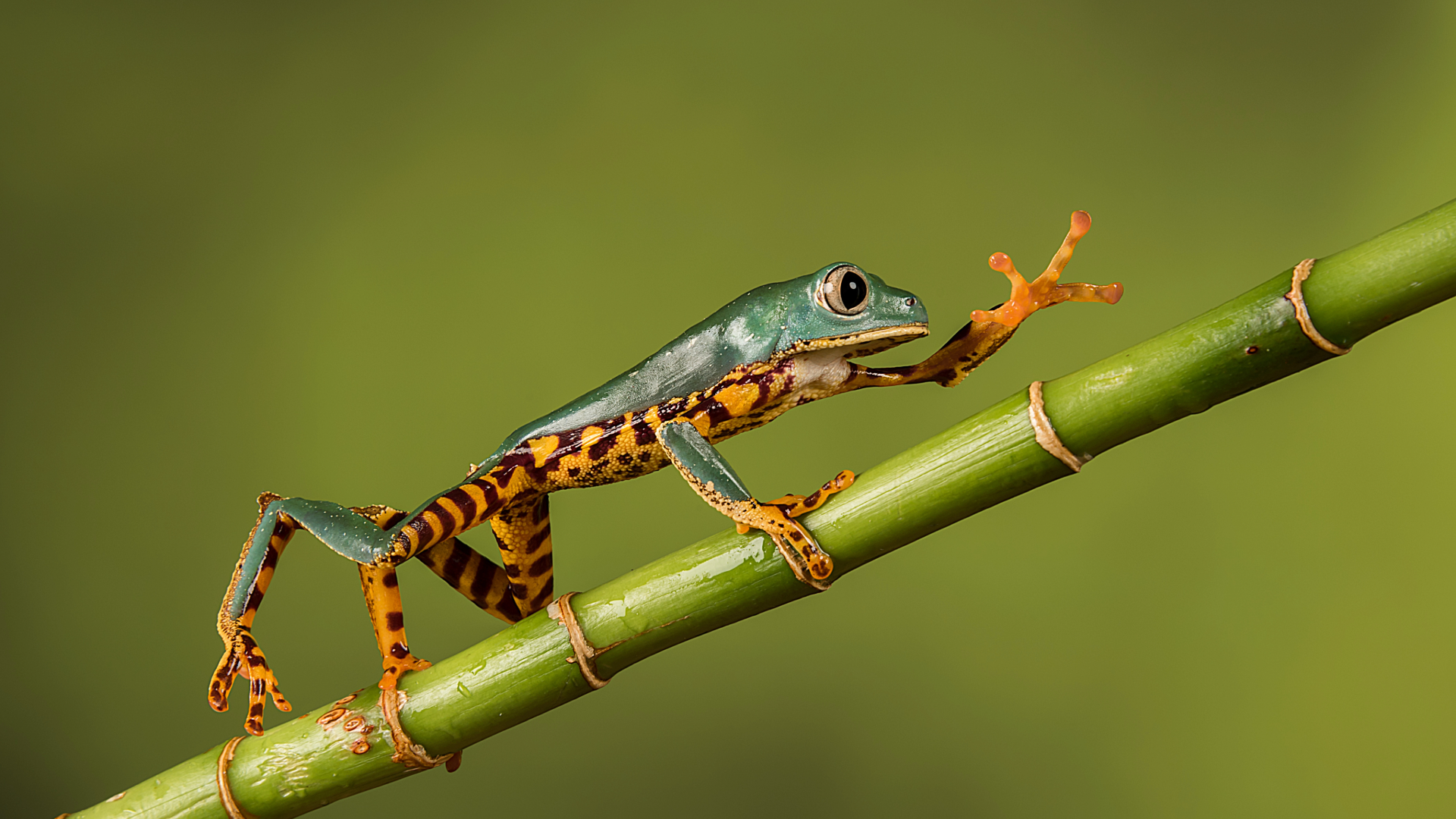
Tiger Leg Tree Frog
Agalychnis callidryas
Basic Information:
The Tiger Leg Tree Frog is a striking, medium-sized arboreal frog native to the Amazon Basin and surrounding tropical regions of South America. Named for the bold, tiger-like striping on its legs, this species also features large eyes and a bright green body adapted for life in the canopy. Adults typically reach 2–3 inches and are nocturnal, spending the day perched on leaves and branches before becoming active at night to hunt. Like other Phyllomedusa, they move with a slow, deliberate “walking” motion rather than jumping frequently, making them especially fascinating to observe.
Lifespan:
8–12 years in captivity with proper care.
Sexing:
Males are generally smaller with vocal sacs
females are larger and more robust.
Enclosure:
Pair or small group: Minimum 18” x 18” x 24” vertical enclosure
These frogs benefit greatly from bioactive, planted setups., Provide:
Dense foliage (live plants preferred)
Horizontal branches and vines
Large leaves for resting and egg-laying behavior
Substrate:
Use a moisture-retentive tropical mix:
Organic soil blends
Coconut fiber
Leaf litter
Moss
A drainage layer (LECA or gravel) is recommended to prevent water buildup.
Lighting & Temperature:
Day Temperature: 74–80°F
Night Temperature: 65–75°F
UVB Lighting: Optional but beneficial (low-level 5.0 UVB for a 12-hour day/night cycle)
Humidity:
Maintain 60-80% humidity
Mist 2–3 times per day or use an automatic misting system
Use a hygrometer to monitor humidity levels.
Unlike some rainforest frogs, Phyllomedusa species prefer a balance of humidity and airflow, not constant saturation.
Food:
Tiger Leg Tree Frogs are Insectivores, Offer:
crickets,
black soldier fly larvae,
small roaches
waxworms.
Juveniles eat daily, while adults should be fed every other day
Water:
Provide a shallow water dish with dechlorinated water.
They also drink droplets from misting, so regular spraying is important.
Supplementation:
Calcium without D3: 2–3x per week
Calcium with D3: 1x per week
Multivitamin: 1x every 1–2 weeks
Tiger Leg Tree Frogs are visually stunning and behaviorally unique. Their slow, deliberate movements, vibrant patterns, and ability to thrive in planted enclosures make them an excellent choice for keepers who enjoy building naturalistic tropical displays.
Are Tiger Leg Tree Frogs For Sale near Me?
If you're in Montgomery County, Maryland, stop by Critters, Reptiles & Exotics in Frederick to check availability of Tiger Leg Tree Frogs and get expert advice on building a healthy, bioactive rainforest setup. From live plants to feeders and habitat supplies, we’re here to help you succeed. There’s always a new adventure waiting at Critters, Reptiles & Exotics!