
Caring for your Northern Glass Frog
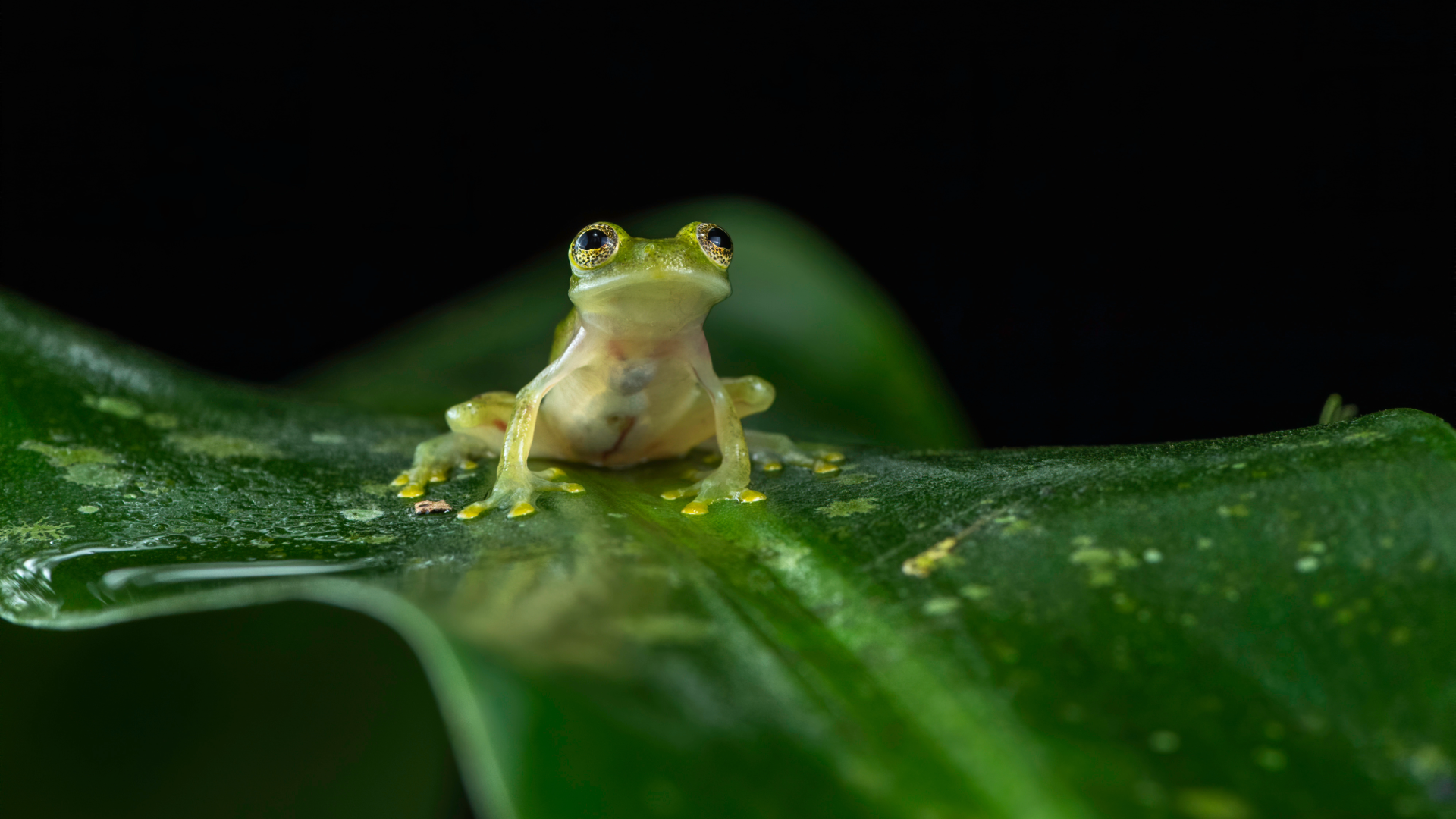
Northern Glass Frog
(Hyalinobatrachium fleischmanni)
Basic Information:
The Northern Glass Frog is a delicate, translucent tree frog native to the humid rainforests of Central America, including Costa Rica, Nicaragua, and parts of Mexico. These frogs are famous for their see-through underside, where internal organs are often visible—making them one of the most fascinating amphibians in the hobby. Adults remain small, typically 1–1.2 inches, and are primarily nocturnal, spending their days resting on the undersides of leaves near water and becoming active at night to hunt and call. Their gentle nature and unique appearance make them excellent display animals for advanced naturalistic vivariums.
Lifespan:
5-8 years in captivity with excellent care and stable environmental conditions.
Sexing:
Males are slightly smaller and are the primary callers.
Females are larger and rounder when carrying eggs.
Sexing is easiest in mature individuals during breeding behavior.
Enclosure:
Small group (2–4 frogs): Minimum 18” x 18” x 24” vertical enclosure
These frogs thrive in heavily planted, bioactive setups with:
road-leaf plants (for resting and egg-laying)
Branches and vines
A shallow water feature or drainage layer to maintain humidity
Substrate:
Use a tropical bioactive substrate such as:
Organic soil blends
Coconut fiber
Leaf litter
Moss
Lighting & Temperature:
Basking Spot: Not required.
Ambient Temperature: 72–78°F during the day.
Cool Side: 70–72°F at night.
UVB Lighting: Provide low-level UVB (ExoTerra UVB 100 or Zoo Med T5 5.0) for 10–12 hours daily. Though nocturnal, they benefit from UVB exposure for calcium metabolism and plant health.
Humidity:
Maintain 80–100% humidity at all times.
Mist daily or multiple times per day
Use live plants and a bioactive system to help stabilize humidity
Ensure good airflow to prevent mold buildup
Food:
Northern Glass Frogs are insectivores. Feed:
Fruit flies (D. melanogaster / D. hydei)
Pinhead crickets
Springtails and small soft-bodied insects
Feed 4–6 times per week, offering small prey appropriate to their size.
Water:
Provide access to clean, dechlorinated water via:
A shallow water area
Frequent misting (they drink from droplets on leaves)
Water quality is critical—avoid chemicals and ensure proper filtration if using a water feature.
Northern Glass Frogs are truly one-of-a-kind display amphibians. Their translucent bodies, peaceful nature, and fascinating behaviors make them ideal for advanced keepers who enjoy building lush, bioactive rainforest enclosures and observing subtle, natural interactions.
Are there pet stores that sell Powdered Glass Frogs Near West Virginia?
If you're in Frederick County, Maryland, stop by Critters, Reptiles & Exotics in Frederick to check availability of Northern Glass Frogs and get expert help building a thriving tropical vivarium. From live plants to misting systems and micro-feeders, we have everything you need to succeed. There’s always a new adventure waiting at Critters, Reptiles & Exotics!