

Caring for your Orange Blackfoot Dart Frog
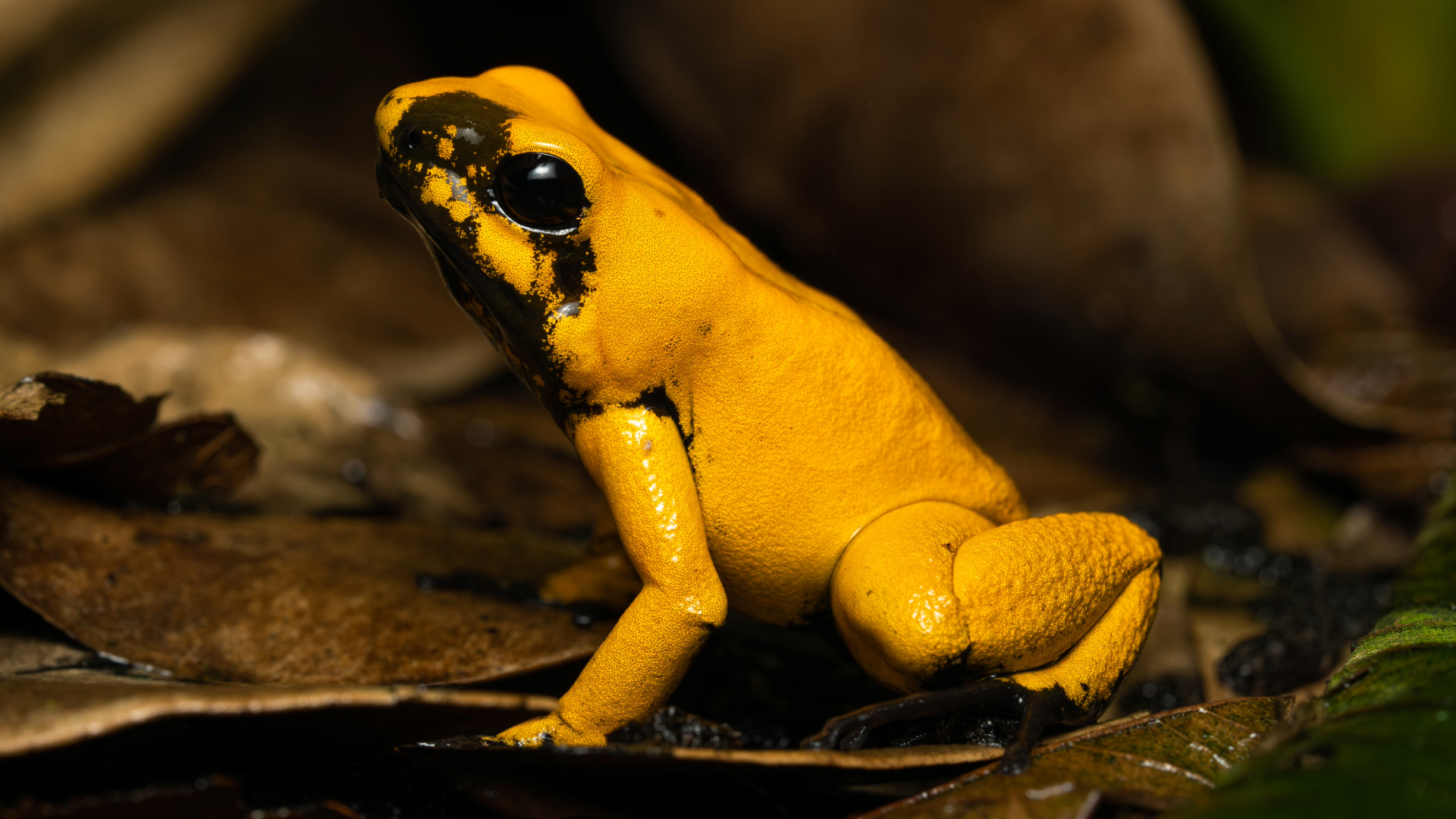
Orange Blackfoot Dart Frog
(Phyllobates terribilis)
Basic Information:
The Orange Blackfoot Dart Frog is a striking color form of Phyllobates terribilis, native to the humid rainforests of Colombia. This species is one of the largest and most iconic dart frogs, with adults typically reaching 1.5–2 inches in length. The orange morph features a vibrant orange body contrasted by darker feet, giving rise to the “blackfoot” name.
In the wild, Phyllobates terribilis is one of the most toxic animals on Earth, but captive-bred individuals are completely non-toxic due to their controlled diet. These frogs are diurnal, bold, and highly visible, often out and exploring their enclosure throughout the day, making them excellent display animals.
Lifespan:
10–15 years in captivity with proper care.
Sexing:
Sexing can be determined with experience.
• Females are typically larger and more robust
• Males are smaller and may vocalize during breeding
Enclosure:
• Juveniles: 10-gallon enclosure
• Adults: 18” x 18” x 18” or larger for pairs or small groups
Provide a well-planted, naturalistic enclosure with plenty of leaf litter, cork bark, and hiding areas. While they may climb occasionally, they are primarily terrestrial and benefit from ample floor space.
Substrate:
A high-humidity, bioactive substrate is ideal, such as:
• ABG mix
• Organic topsoil blends with leaf litter
• Moss layers
Bioactive setups help maintain humidity and support microfauna like springtails and isopods.
Lighting & Temperature:
• Ambient Temperature: 72–78°F
• Cool Side: 70–72°F
• Basking Spot: Not required
• UVB Lighting: Not required but low-level UVB can be beneficial
• Provide a 10–12 hour light cycle
Avoid high temperatures, as dart frogs are sensitive to overheating.
Humidity:
Maintain high humidity (80–100%).
Consistent moisture is critical for hydration and skin health.
Food:
Orange Blackfoot Dart Frogs are insectivorous.
• Primary diet: fruit flies (Drosophila spp.)
• Supplemental foods: springtails and other microfauna
Feed small amounts daily or every other day.
Supplementation:
Calcium without D3: Dust food 3–4 times weekly.
Calcium with D3: Use once a week if UVB lighting is provided.
Multivitamins: Offer once monthly to support overall health.
Water:
Provide hydration through regular misting and optional shallow water features. These frogs absorb moisture through their skin and do not require standing water.
Orange Blackfoot Dart Frogs are bold, brightly colored, and highly active, making them an excellent centerpiece species for tropical bioactive enclosures. Their visibility and relatively hardy nature (for dart frogs) make them especially appealing to keepers looking for a vibrant display animal.
Is There a Local Pet Store Selling Orange Blackfoot Dart Frogs Near Me?
If you're in Berkeley County, West Virginia, it’s just a short drive to Critters, Reptiles & Exotics in Frederick, Maryland, where you can check availability of Orange Blackfoot Dart Frogs and get expert advice on bioactive setups, humidity control, and care. Whether you're building a tropical enclosure or expanding your collection, there’s always a new adventure waiting at Critters, Reptiles & Exotics!