

Caring for your Jumping Spider
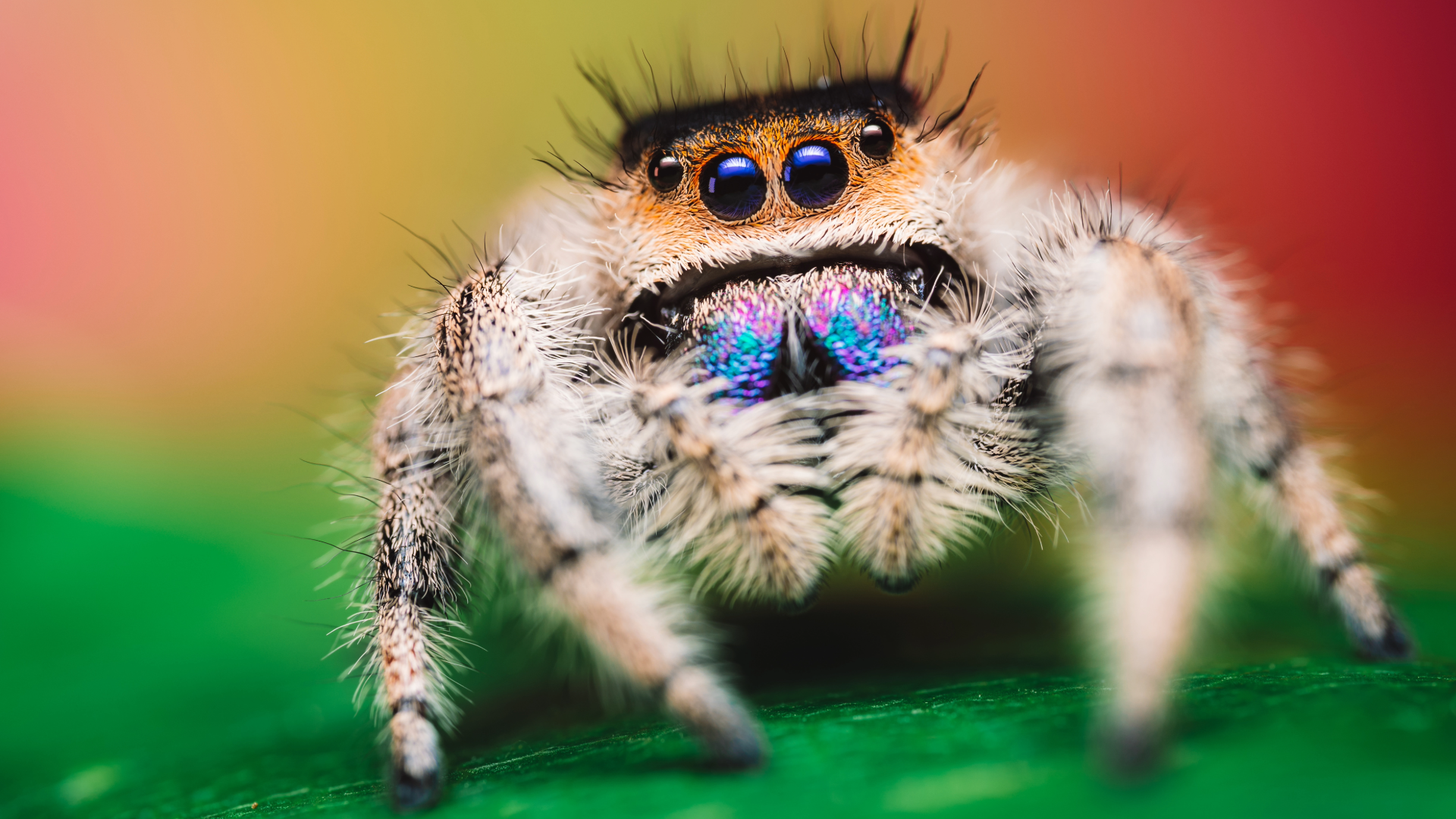
Jumping Spider
(Phidippus spp. / Platycryptus spp.)
Basic Information:
Jumping Spiders are small, highly intelligent arachnids found throughout the world, including across the United States in regions such as Florida and beyond. Unlike many other spiders, they rely on excellent vision and active hunting rather than webs to catch prey.
Common species in the pet trade include the Regal Jumping Spider (Phidippus regius), Bold Jumping Spider (Phidippus audax), and Boreal/Tan Jumping Spider (Platycryptus undatus). Adults typically range from 0.5–1 inch in body length.
Jumping spiders are diurnal, curious, and interactive, often turning to observe movement outside their enclosure. Their personality and manageable size make them one of the most popular beginner invertebrates.
Lifespan:
• Females: 1–2 years
• Males: 6–12 months
Sexing:
Sexing is relatively easy in most species.
• Males are typically smaller, more slender, and often more colorful
• Females are larger-bodied and tend to live longer
Enclosure:
• Juveniles: Small ventilated enclosure or vial setup
• Adults: 4” x 4” x 6” enclosure or larger
Provide a vertically oriented enclosure with plenty of anchor points near the top, as jumping spiders prefer to build their resting hammocks in elevated areas. Include small branches, cork bark, or artificial décor.
Substrate:
A simple substrate works well, such as:
• Coconut fiber
• Paper towel
• Bioactive substrate (optional)
Substrate is less critical than providing structure and ventilation.
Lighting & Temperature:
• Ambient Temperature: 70–78°F
• Basking Spot: Not required
• UVB Lighting: Not required, but bright ambient light is beneficial
• Provide a 10–12 hour light cycle
Jumping spiders rely heavily on vision, so proper lighting helps encourage natural behavior.
Humidity:
Maintain light to moderate humidity (50–70%) depending on species.
• Light misting 2–3 times per week is typically sufficient
• Avoid overly damp conditions
Food:
Jumping spiders are carnivorous hunters.
• Feed live prey such as fruit flies, small crickets, or roaches
• Juveniles should be fed more frequently
• Adults typically eat every 2–3 days
Prey should always be appropriately sized.
Water:
Provide hydration through light misting.
Jumping spiders will drink droplets from enclosure surfaces rather than from a water dish.
Species Differences (Regal vs Bold vs Boreal):
• Regal Jumping Spider (Phidippus regius):
Larger, more interactive, and slightly prefers higher humidity. Excellent beginner species.
• Bold Jumping Spider (Phidippus audax):
Very hardy and adaptable. One of the most forgiving species for new keepers.
• Boreal/Tan Jumping Spider (Platycryptus undatus):
Flatter-bodied and faster. Prefers drier conditions and strong ventilation. Slightly more advanced.
Where Can I Buy a Jumping Spider Near Me?
If you're in Loudoun County, Virginia, it’s just a short drive to Critters, Reptiles & Exotics in Frederick, Maryland, where you can check availability of Jumping Spiders—including Regal, Bold, and Boreal species—and get expert advice on enclosure setup and care. Whether you're new to invertebrates or adding a fun, interactive species to your collection, there’s always a new adventure waiting at Critters, Reptiles & Exotics!