
Caring for your Giant Dead Leaf Mantis
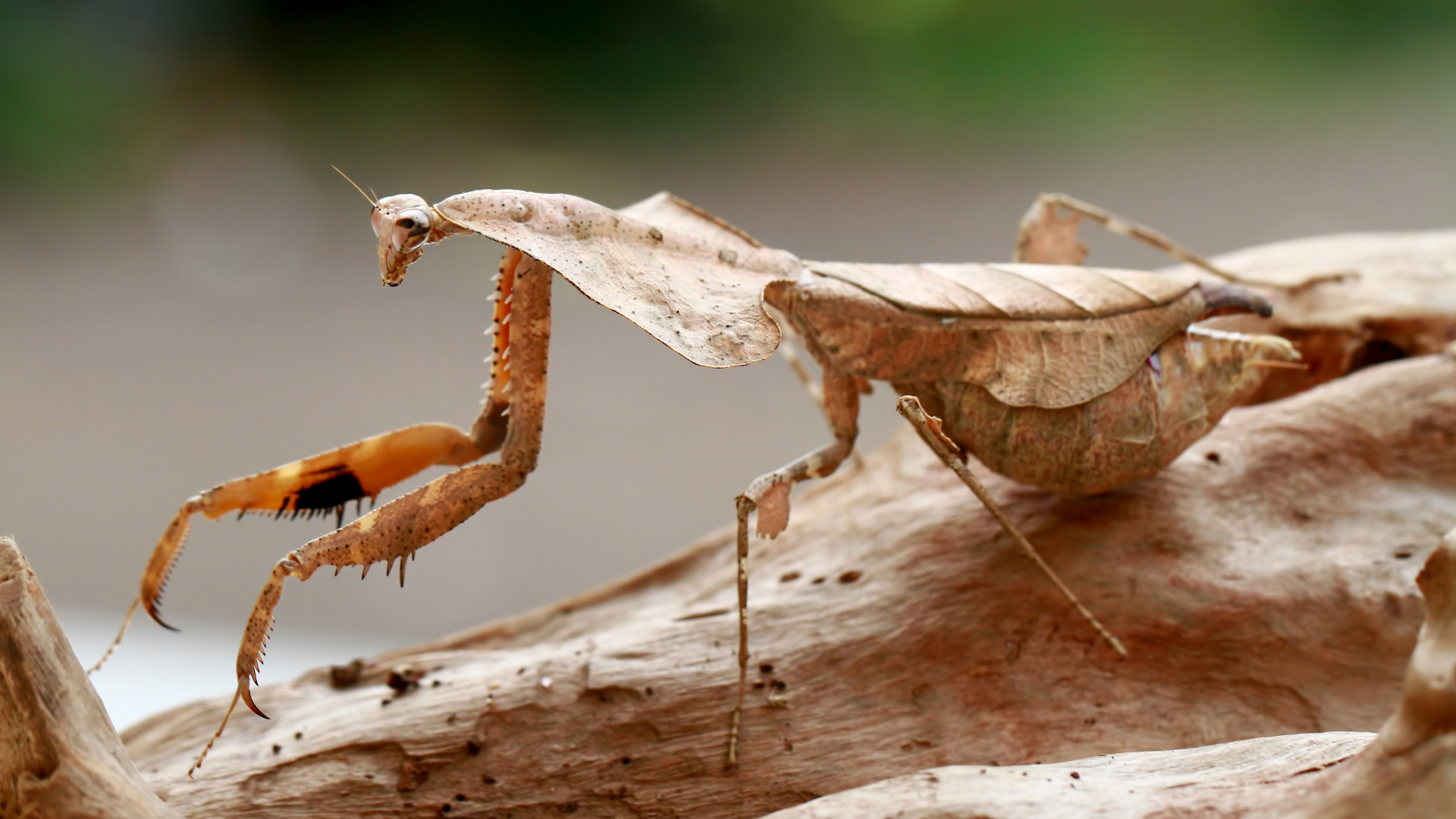
Deroplatys desiccata
Basic Information:
The Giant Dead Leaf Mantis is one of the most iconic camouflage artists in the insect world, native to the tropical rainforests and scrublands of Southeast Asia (including Malaysia, Indonesia, and Borneo). This species is famous for its incredible crypsis—its body closely mimics a dried, decaying leaf, complete with irregular jagged edges, mottled brown and tan coloring, and an expansive shield-like thorax (pronotum). Adult females reach an impressive 3 to 3.5 inches in length with a broad, leaf-shaped profile, while males are slightly smaller, more slender, and measure roughly 2.5 to 3 inches.
These predatory insects are diurnal ambush hunters, remaining motionless during daylight hours among foliage and twigs, gently swaying in the breeze to mimic a leaf before striking at prey with lightning speed. When threatened, they exhibit a dramatic deimatic (threat) display: flaring their wings to reveal striking black-and-white eye-spots while flashing vivid orange patches on their raptorial legs. They are solitary, calm when handled gently, and relatively hardy compared to other exotic mantis species.
Lifespan:
10–12 months for females; 6–8 months for males (from hatch to end of natural adult life).
Sexing:
Sex can be determined on older nymphs (L4–L5 stage and beyond) by counting the abdominal segments on the underside: males have 8 visible abdominal sternites, whereas females have 6 (with the final segment being noticeably larger and wider). In adults, females possess a significantly wider thoracic shield and shorter wings that do not extend far past the abdomen, while males are slimmer with longer wings built for flight.
Enclosure:
Nymphs (L1–L4): 16–32 oz ventilated deli cups or small acrylic insect enclosures with mesh/fabric lids for hanging.
Subadults & Adults: A vertical enclosure measuring at least 8x8x12 inches (such as a vertical nano terrarium or acrylic mantis habitat). Enclosure height is critical: it must be at least 3 times the mantis's total length, and the width at least 2 times its length, to provide adequate vertical clearance for safe, hang-down molting. Use a mesh top or fabric screen (avoid wire mesh, which can damage their feet) along with artificial/live twigs and foliage for hanging perches.
Substrate:
A 1–2 inch layer of coconut fiber, peat moss, or organic topsoil mixed with sphagnum moss to maintain humidity. Paper towels also work well for young nymphs for easy hygiene and food monitoring.
Lighting & Temperature:
Basking Spot: None (direct hot lamps will dehydrate and overheat them).
Ambient Temperature: 75°F–82°F (Comfortable warm room temperatures; avoid sustained drops below 70°F).
Cool Side: 72°F–75°F
Lighting & UVB: No UVB required. Standard ambient room lighting or a gentle, low-heat LED on a 12-hour day/night cycle is ideal.
Humidity:
70%–80%. Dead leaf mantises require consistent humidity to ensure successful molts. Mist the enclosure lightly once per day or every other day, ensuring adequate cross-ventilation so moisture does not become stagnant.
Food:
Strictly Carnivorous (Insectivorous). Feed exclusively live, active prey:
Early Nymphs (L1–L3): Fruit flies (Drosophila melanogaster and Drosophila hydei).
Mid-to-Late Nymphs (L4–L6): Curly-wing flies, bottle flies, small crickets, and small dubia roaches.
Adults: Houseflies, blue bottle flies, medium waxworms/moths, and appropriately sized crickets or roaches offered every 2–4 days. Avoid feeding exclusively hard-shelled or ground-dwelling insects; flying prey provides the best hunting enrichment.
Water:
Mantises do not drink from standing water bowls. They get their hydration by drinking water droplets sprayed onto the enclosure walls, leaves, or mesh lid during routine mistings.
Giant Dead Leaf Mantises are quiet, visually stunning oddities that take up very little space. Their masterclass camouflage, dramatic defensive posturing, and lightning-fast predatory strikes make them endlessly fascinating display animals for keepers of all experience levels.
Where Can I Get a Dead LEaf MAntis Near Me?
If you're in Gettysburg, Pennsylvania, visit Critters, Reptiles & Exotics in Frederick to check availability of Giant Dead Leaf Mantises and get expert guidance on vertical molting setups, proper humidity balance, and live feeding schedules. Whether you're entering the fascinating world of exotic insects or adding a master of camouflage to your collection, there’s always a new adventure waiting at Critters, Reptiles & Exotics!