

Caring for your Ghost Mantis
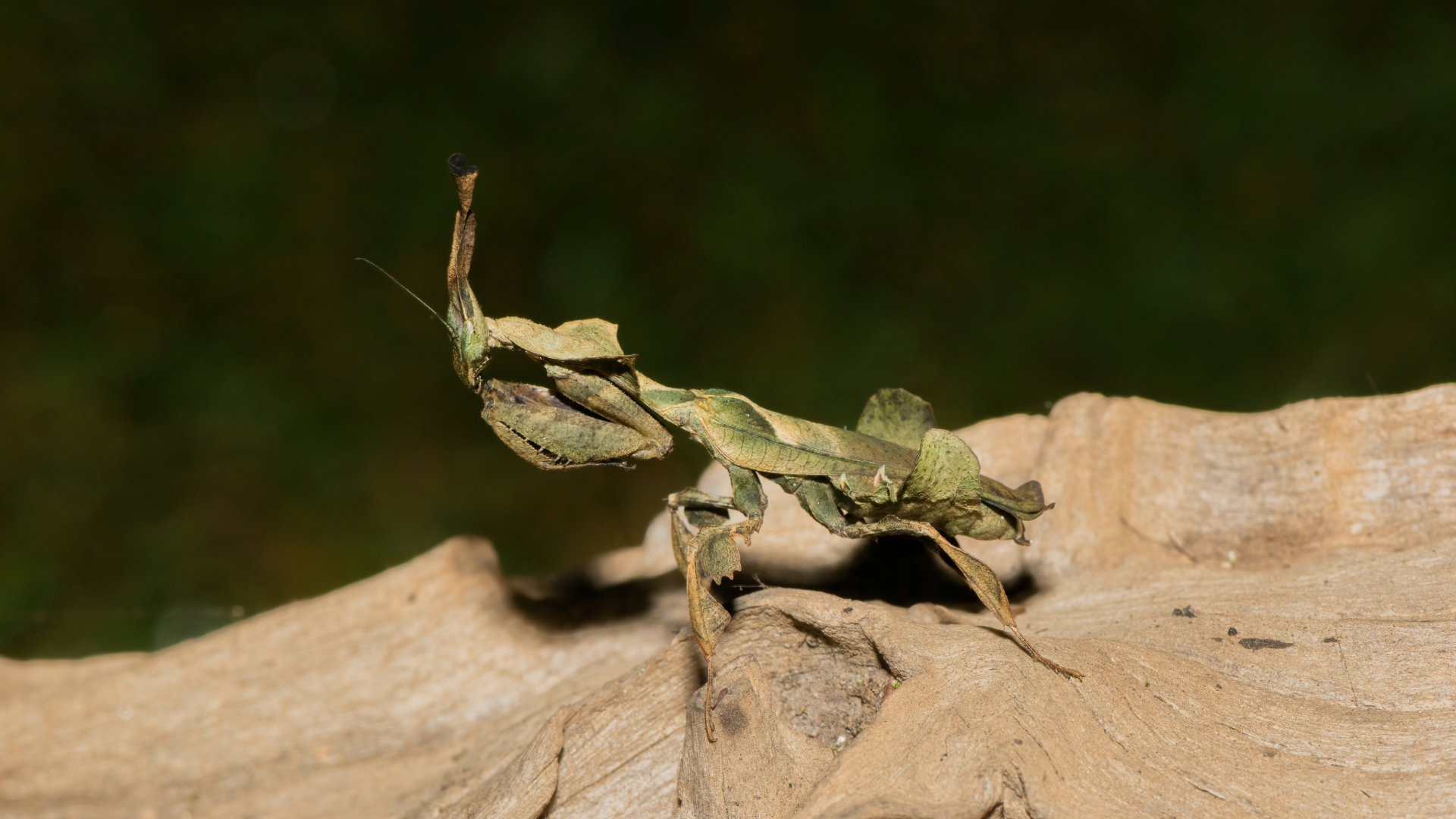
Ghost Mantis
Phyllocrania paradoxa
Basic Information:
The Ghost Mantis is a small, leaf-mimicking praying mantis native to the arid and semi-arid regions of Africa and Madagascar. Known for its incredible camouflage, delicate leaf-like appendages, and calm temperament, this species is one of the most popular pet mantids in the hobby. They are ambush predators and rely on their disguise rather than speed, spending long periods motionless while waiting for prey. Ghost Mantises are diurnal and best kept in display-style enclosures where their unique mimicry can be appreciated.
Lifespan:
8–12 months depending on sex (females live longer than males).
Size:
Adults typically reach 1.5–2 inches, making them a smaller mantis species.
Sexing:
Sexing can be performed after several molts:
Females have broader abdomens and typically 6 abdominal segments.
Males are slimmer, have 8 abdominal segments, and develop longer antennae as they mature.. Adult males are lighter-bodied and often more active.
Enclosure:
Sexing can be performed after several molts:
Females have broader abdomens and typically 6 abdominal segments.
Males are slimmer, have 8 abdominal segments, and develop longer antennae as they mature.
Adult males are lighter-bodied and often more active.
Substrate:
Use a lightly humid substrate such as:
Coconut fiber
Peat moss
Paper towels for easy cleaning
Maintain a mostly dry environment with a lightly moistened area to support molting.
Lighting & Temperature:
Basking Spot: Not required
Ambient Temperature: 75–80°F
Cool Side: 70–72°F
UVB: Not required; avoid intense lighting
Provide a gentle day/night cycle.
Humidity:
Maintain 50–70% humidity depending on life stage.
Nymphs prefer slightly higher humidity; adults tolerate it lower. Mist lightly every 1–2 days but avoid over-saturation.
Food:
Ghost Mantises are carnivorous. Suitable feeders include:
Hydei fruit flies (for small nymphs)
House flies
Crickets (appropriately sized)
Small roaches
Feed every 2–3 days. Adults may require fewer feedings.
Water:
Do not use standing water dishes. Mantises drink droplets from light misting. Mist enclosure walls lightly and avoid soaking décor.
Handling:
Ghost Mantises are more tolerant of group living than most mantis species, but cannibalism can still occur, especially around molting.
Best practice: House individually for safety.
Handling should be minimal; although calm, they are extremely fragile.
Ghost Mantises are captivating display invertebrates with stunning camouflage and calm behavior. Their small size, simple care requirements, and unique appearance make them ideal for beginners and experienced keepers alike.
Are Ghost Mantids for sale at a pet store near me?
If you're in Loudoun County, Virginia, visit Critters, Reptiles & Exotics in Frederick, Maryland to check availability on Ghost Mantises and get expert advice on enclosure setup, feeding schedules, and proper humidity control. Whether you're new to keeping mantids or building a diverse invertebrate collection, we’re here to help you succeed. There’s always a new adventure waiting at Critters, Reptiles & Exotics!