

Caring for your Cane Toad
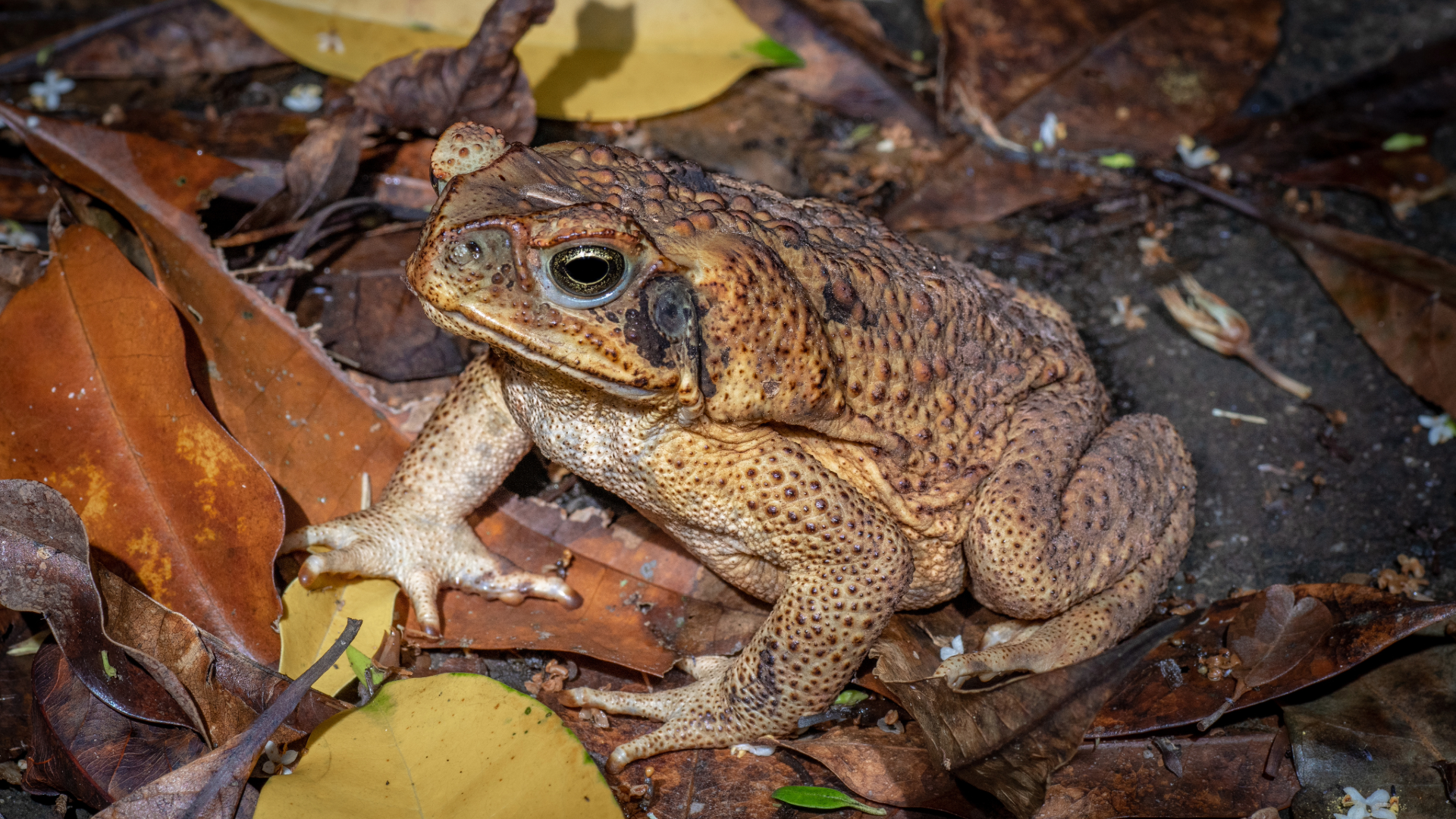
Cane Toad
(Rhinella marina)
Basic Information:
The Cane Toad is a large, terrestrial amphibian native to Central and South America but widely introduced to other regions, including parts of Australia. Known for their rugged, warty appearance and impressive size, adults can reach 4–9 inches in length. Cane Toads are nocturnal and spend much of their time hiding during the day, emerging at night to hunt insects and other small prey.
They are hardy and adaptable but are also well known for their defensive toxin, which is secreted from glands behind their eyes. This toxin can be harmful to pets and irritating to humans if handled improperly, so care should always be taken when interacting with them. Cane Toads are best suited as display animals with minimal handling.
Lifespan:
10-15 years in captivity with proper care.
Sexing:
Sexing can be difficult but may be determined by an experienced keeper.
• Females are typically larger and more robust.
• Males are smaller and may vocalize (call), especially during breeding conditions.
Enclosure:
• Juveniles: 10–20 gallon enclosure with secure hides.
• Adults: 40-gallon breeder or larger.
Provide a ground-focused enclosure with ample floor space, hiding spots, cork bark, and leaf litter. Cane Toads are terrestrial and do not require climbing structures.
Substrate:
A moisture-retaining substrate is ideal, such as:
• Coconut fiber
• Organic topsoil mixes
• Cypress mulch
Substrate should be kept slightly damp but not waterlogged to maintain proper humidity.
Lighting & Temperature:
• Basking Spot: Not required
• Ambient Temperature: 72–82°F
• Cool Side: 70–75°F
• UVB Lighting: Not required but low-level UVB can be beneficial. Provide a 10–12 hour light cycle.
Avoid excessive heat, as Cane Toads prefer moderate temperatures.
Humidity:
Maintain 60–80% humidity. Regular misting helps maintain hydration and supports healthy skin.
Food:
Cane Toads are opportunistic carnivores.
• Feed a variety of insects such as crickets, roaches, and worms.
• Larger individuals can occasionally eat appropriately sized vertebrate prey (such as pinky mice), though this should be infrequent.
Juveniles should be fed more frequently, while adults typically eat 2–3 times per week.
Supplementation Schedule:
Calcium without D3: Dust food 3–4 times weekly.
Calcium with D3: Use once a week if adequate UVB lighting is provided.
Multivitamins with D3: Offer once monthly in place of the Calcium with D3 to support overall health.
Water:
Provide a shallow water dish large enough for soaking, with fresh, dechlorinated water available at all times. Cane Toads will frequently sit in their water dish.
Cane Toads are hardy, low-maintenance amphibians that are well-suited for keepers interested in a simple, terrestrial setup. Their large size and bold feeding response make them engaging to observe, especially during feeding time.
Where Can I Buy a Cane Toad Near Me?
If you're in York County, Pennsylvania, it’s just a short drive to Critters, Reptiles & Exotics in Frederick, Maryland, where you can check availability of Cane Toads and get expert advice on enclosure setup, humidity, and feeding. Whether you're new to amphibians or expanding your collection, there’s always a new adventure waiting at Critters, Reptiles & Exotics!