

Caring for your Bumble bee Dart FRog
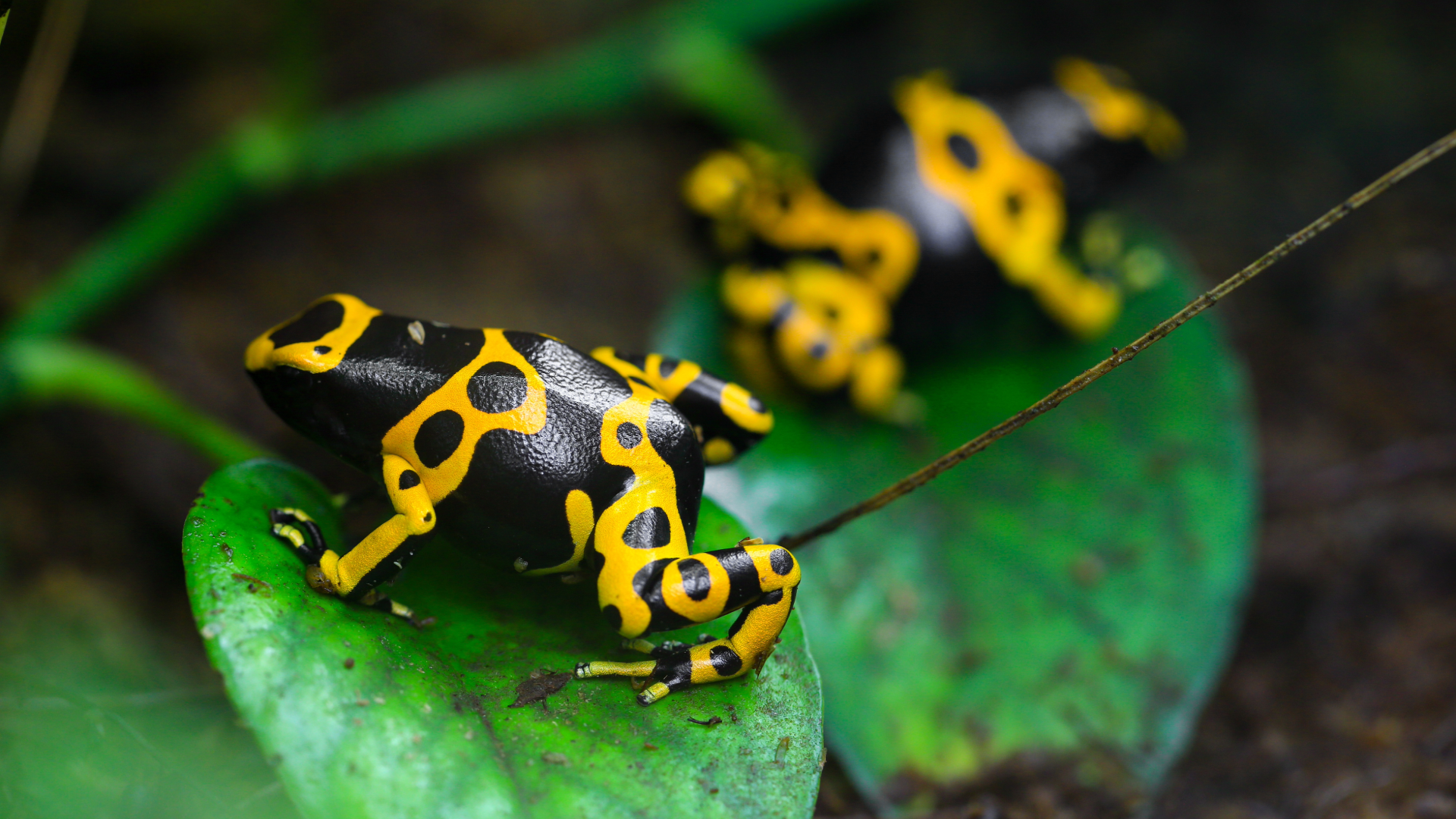
Dendrobates tinctorius
Basic Information:
The Bumble Bee Dart Frog is a striking color variety of the Dyeing Poison Dart Frog, native to the tropical forests of northern South America, particularly Suriname and neighboring regions. The Bumble Bee variety is known for its bold yellow and black coloration, resembling the pattern of a bumble bee. Adults typically reach about 1.5–2 inches in length.
Despite their association with poison dart frogs, captive-bred individuals are not considered poisonous because their defensive skin toxins are dependent on specific compounds obtained from their wild diet. They are diurnal, terrestrial frogs that spend much of their time exploring the leaf litter and lower levels of a planted enclosure. Bumble Bee Dart Frogs are best kept as display animals and should be handled as little as possible.
Lifespan:
10–15 years in captivity with proper care, with some individuals living longer.
Sexing:
Sexing can be difficult until the frogs mature.
• Females are generally larger and heavier-bodied
• Males are usually smaller and may be identified by their calling behavior
Enclosure:
• Juveniles: 10-gallon enclosure for a small individual or pair
• Adults: 18” x 18” x 18” enclosure or larger
Provide a secure, well-ventilated tropical terrarium with plenty of leaf litter, cork bark, plants, and hiding areas. Dart frogs spend much of their time on the ground, so floor space is more important than excessive enclosure height.
Substrate:
A moisture-retaining, naturalistic substrate is ideal, such as:
• ABG-style bioactive mixes
• Coconut fiber-based mixes
• Organic soil with leaf litter
A drainage layer is recommended for planted or bioactive setups. Leaf litter should cover much of the surface and be replaced as it breaks down.
Lighting & Temperature:
• Ambient Temperature: 68–76°F
• Cool Side: 65–70°F
• UVB Lighting: Low-level UVB (2.0–5.0) is recommended
• Provide a 10–12 hour light cycle
Avoid temperatures above 80°F for extended periods, as dart frogs are particularly sensitive to overheating.
Humidity:
Maintain 70–100% humidity with regular misting while still providing good ventilation. The enclosure should remain humid but should not be constantly waterlogged. Allow the surface to partially dry between misting cycles while maintaining adequate humidity deeper within the enclosure.
Food:
Bumble Bee Dart Frogs are insectivorous and require very small prey.
• Flightless fruit flies are an excellent staple food
• Springtails can provide an additional food source, especially in bioactive enclosures
• Juveniles should be offered food frequently
• Adults are generally fed several times per week
Prey should be appropriately sized for the frog.
Supplementation Schedule:
Calcium without D3: Dust feeders 3–4 times weekly.
Calcium with D3: Use once weekly if UVB is provided.
Multivitamins: Offer once monthly.
Water:
Bumble Bee Dart Frogs obtain much of their hydration from their humid environment and from water droplets on plants and enclosure surfaces. Provide clean, dechlorinated water for misting. A large standing-water bowl is generally unnecessary and can create a drowning risk for small frogs.
Bumble Bee Dart Frogs are an excellent choice for keepers who enjoy beautifully planted tropical terrariums and fascinating natural behaviors. Their bold yellow-and-black coloration, daytime activity, and relatively small size make them a spectacular display species. A well-established bioactive terrarium can also support natural behaviors while creating a miniature rainforest environment.
Where Can I Buy a Bumble Bee Dart Frog Near Me?
If you're in Frederick County, Maryland, it’s just a short drive to Critters, Reptiles & Exotics in Frederick, where you can check availability of Bumble Bee Dart Frogs and get expert advice on terrarium setup, bioactive substrates, humidity, and feeding. Whether you're building your first dart frog enclosure or expanding your tropical collection, there’s always a new adventure waiting at Critters, Reptiles & Exotics!