

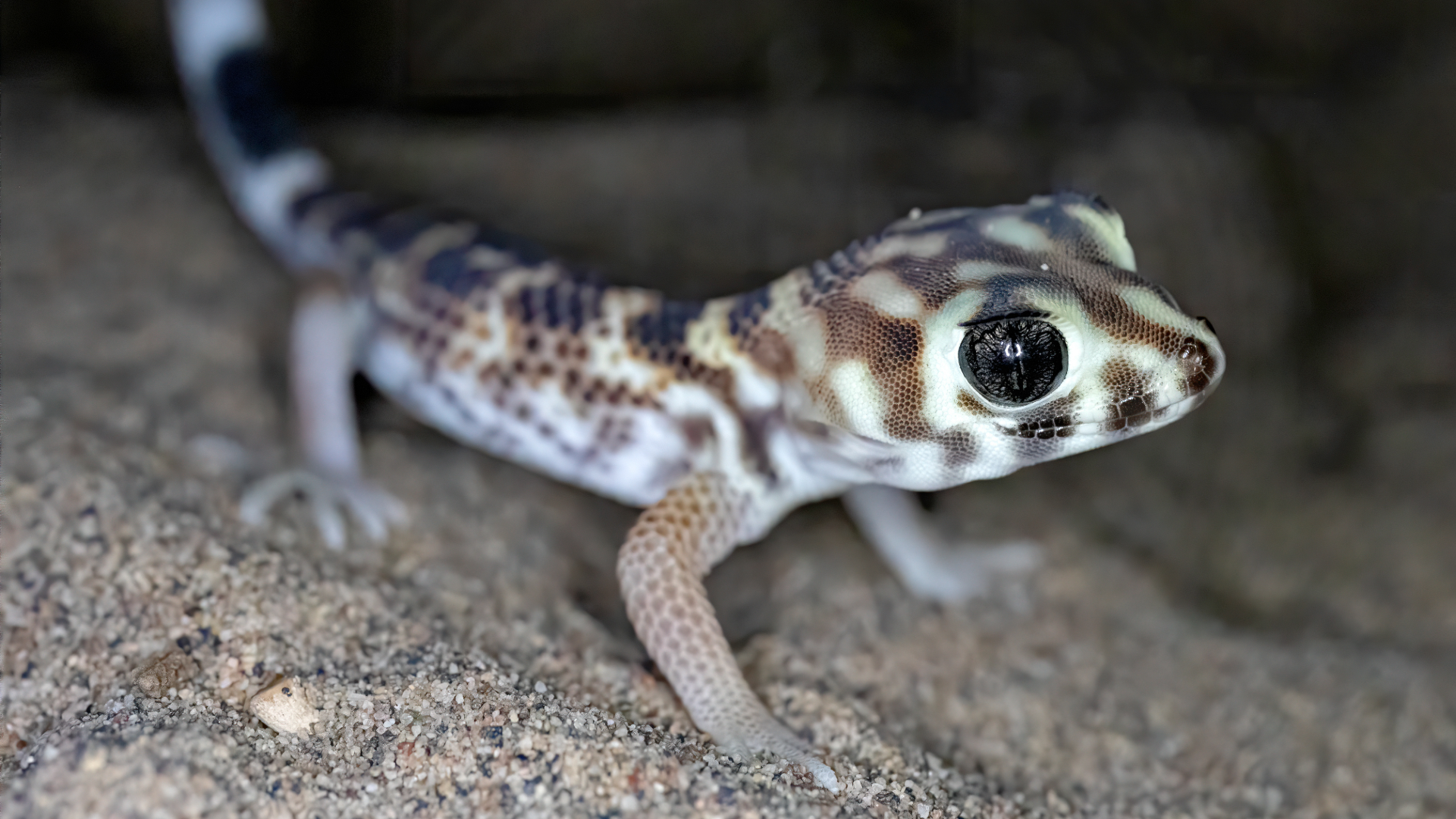
Teratoscincus scincus
Basic Information:
The Russian Frog-Eyed Gecko is a unique, desert-dwelling gecko native to Central Asia, including regions of Kazakhstan, Uzbekistan, and surrounding areas. This species is known for its large, protruding eyes, soft velvety skin, and banded coloration that helps it blend into sandy environments. Adults typically reach 5–6 inches in length.
They are nocturnal and primarily terrestrial, often found on sandy flats where they hunt insects under the cover of darkness. Unlike many geckos, they do not have adhesive toe pads and instead rely on speed and camouflage. They are generally calm but delicate, making them better suited as display animals with minimal handling.
Lifespan:
8–12 years in captivity with proper care.
Sexing:
Sexing can be determined with experience.
• Males may have visible hemipenal bulges and pre-anal pores
• Females are typically slightly smaller and lack these features
Enclosure:
• Juveniles: 10–20 gallon enclosure
• Adults: 20-gallon long enclosure or larger
Provide a secure, ground-oriented enclosure with plenty of open space and hiding areas. These geckos prefer low, wide setups rather than vertical space.
Substrate:
A loose, sandy substrate is ideal, such as:
• Sand/topsoil mix
• Play sand (with structure added)
• Desert bioactive substrate
Substrate should allow for shallow burrowing and natural movement.
Lighting & Temperature:
• Basking Spot: 90–95°F
• Ambient Temperature: 75–85°F
• Cool Side: 70–75°F
• UVB Lighting: Not required but low-level UVB can be beneficial
• Provide a 10–12 hour light cycle
Maintain a proper heat gradient with thermostat-controlled heating.
Humidity:
Maintain low humidity (20–40%).
Provide a slightly more humid hide if needed for shedding.
Food:
Russian Frog-Eyed Geckos are insectivorous.
• Feed insects such as crickets, roaches, and mealworms
• Juveniles should be fed daily
• Adults typically eat every other day
Prey should be appropriately sized.
Supplementation Schedule:
Calcium without D3: Dust feeders 3–4 times weekly.
Calcium with D3: Use once weekly if UVB is provided.
Multivitamins: Offer once monthly.
Water:
Provide a shallow water dish with fresh water at all times. While adapted to dry environments, they will drink when given the opportunity.
Russian Frog-Eyed Geckos are a fascinating choice for keepers interested in desert species. Their unusual appearance, soft skin, and active nighttime behavior make them a standout display reptile.
Is There a Local Pet Store Selling Russian Frog-Eyed Geckos Near Me?
If you're in Washington County, Maryland, it’s just a short drive to Critters, Reptiles & Exotics in Frederick, where you can check availability of Russian Frog-Eyed Geckos and get expert advice on enclosure setup, substrate, and care. Whether you're exploring desert reptiles or expanding your collection, there’s always a new adventure waiting at Critters, Reptiles & Exotics!