

Caring for your Keeled Lizard
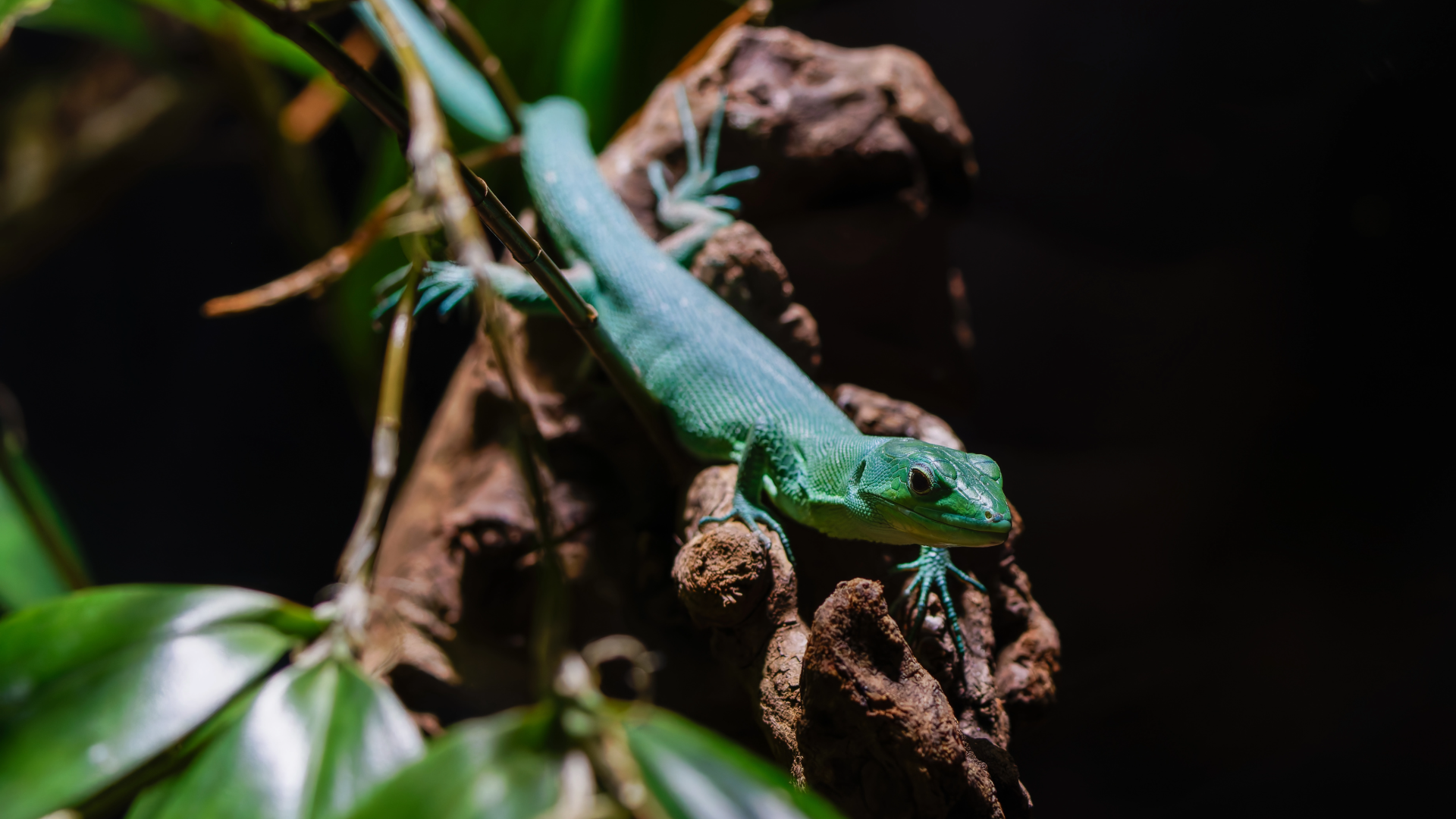
Keeled Lizard
(Gastropholis prasina)
Basic Information:
The Green Keeled Lizard (or Emerald Keeled Lizard) is a slender, brilliant emerald-green arboreal reptile native to the coastal rainforests, woodlands, and thickets of East Africa, predominantly in Kenya and Tanzania. They are named for the prominent keeled scales running along their body and extraordinarily long, prehensile tail, which accounts for over two-thirds of their 12 to 16-inch total length and functions like a fifth limb while navigating branches.
These lizards are strictly diurnal and highly active, spending their days climbing, basking, and hunting among elevated foliage. Known for their curious, intelligent, and bold demeanor, Keeled Lizards quickly become accustomed to their keepers and are widely considered one of the most engaging display lizards in the trade.
Lifespan:
Keeled Lizards live 10-15 years in captivity with excellent care.
Sexing:
Sexing can be subtle:
• Males often display slightly broader heads and may show more intense coloration.
• Females tend to have slimmer bodies.
Visual sexing isn’t always reliable, so breeders may rely on behavioral cues or experienced examination.
Enclosure:
Keeled Lizards are fast, agile climbers requiring vertical terrarium space.
Juveniles: 18" x 18" x 24" glass terrarium.
Adults: Minimum 24" x 18" x 36" or 36" x 18" x 36" vertical screen or glass enclosure.
Equip the enclosure with abundant climbing vines, cork bark branches, elevated ledges, and dense live or silk plants (such as Pothos and Ficus) to offer security and climbing opportunities.
Substrate:
A moisture-retentive bioactive substrate blend consisting of coconut coir, cypress mulch, orchid bark, sphagnum moss, and leaf litter. This holds humidity well while supporting beneficial cleanup crews like isopods and springtails.
Lighting & Temperature:
Basking spot: 90°F–95°F directly under an overhead basking bulb focused on an elevated branch.
Cool side: 75°F–78°F.
Ambient Temperature: 80°F–85°F.
UVB lighting requirements: High-output T5 5.0 / 6% UVB lighting spanning the enclosure length is required for vitamin D3 synthesis and metabolic health.
Lighting schedule: 12-hour day / 12-hour night cycle.
Humidity:
70%–80% relative humidity, with daily misting spikes up to 90%. Heavy daily misting or an automated misting system is necessary to facilitate shedding and hydration.
Food:
Insectivorous. Feed a varied diet of live, gut-loaded insects such as crickets, dubia roaches, silkworms, hornworms, and black soldier fly larvae. Dust prey items with pure calcium at every feeding, calcium with D3 once weekly, and a multivitamin monthly.
Water:
Provide fresh, dechlorinated water in a shallow elevated or ground dish. Keeled Lizards primarily lick water droplets off plant leaves, so regular misting or a drip system is essential for proper hydration.
Their vibrant emerald coloration, prehensile tail, high daytime activity, and inquisitive nature make Keeled Lizards a premier choice for reptile enthusiasts seeking a manageable and beautiful arboreal species.
Are Keeled Lizards for Sale Near Me?
If you're in Howard County, Maryland, visit Critters, Reptiles & Exotics in Frederick to check availability of Keeled Lizards and get expert guidance on vertical terrarium design, UVB lighting setup, and diet enrichment. Whether you're building a bioactive tropical habitat or choosing your next reptile, there’s always a new adventure waiting at Critters, Reptiles & Exotics!