
European Legless Lizard
Pseudopus apodus
Basic Information:
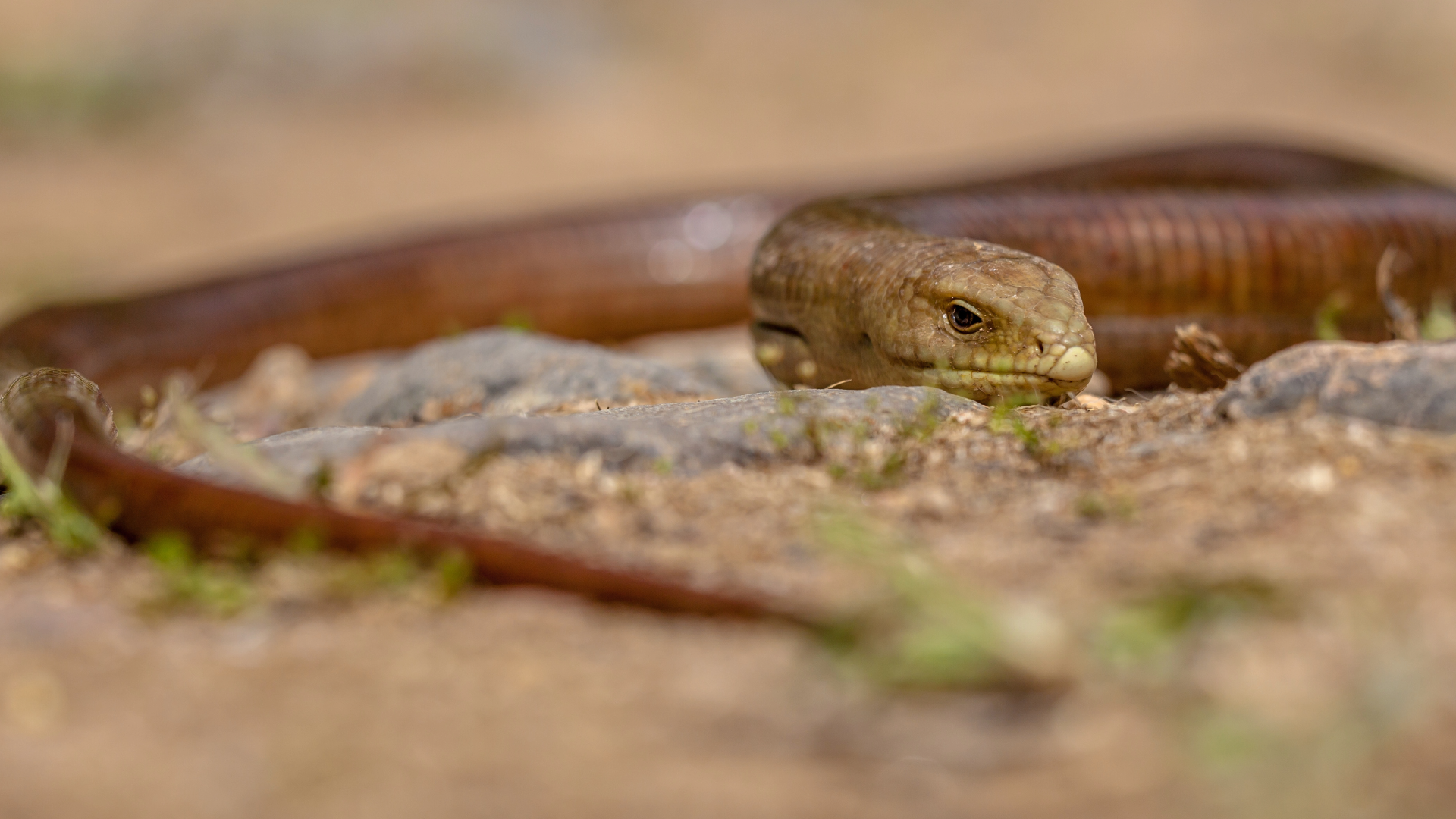
The European Legless Lizard, also known as the Glass Lizard, is a large, snake-like lizard native to southeastern Europe and parts of western Asia, including regions of Greece. Despite its snake-like appearance, it is a true lizard, possessing eyelids and external ear openings. Adults can reach an impressive 3–4 feet in total length, making them one of the largest legless lizard species.
They are diurnal and terrestrial, spending much of their time exploring, burrowing, and foraging. Unlike many snakes, they rely on crushing prey rather than constriction. European Legless Lizards are generally calm and can become quite tolerant of their keepers, making them an excellent choice for those interested in unique reptiles.
Lifespan:
15–25 years in captivity with proper care.
Sexing:
Sexing is best determined by experienced keepers or veterinarians.
• Males may have broader heads and more pronounced body features
• Females are often slightly more slender, though differences can be subtle
Enclosure:
• Juveniles: 20–40 gallon enclosure
• Adults: 4’ x 2’ enclosure minimum; larger preferred
Provide a secure, ground-oriented enclosure with plenty of floor space. Include hides, cork bark, and areas for digging, along with clutter to create a naturalistic environment.
Substrate:
A natural loose substrate that allows for burrowing is ideal, such as:
• Topsoil/sand mix
• Coconut fiber blends
• Soil-based substrates
Substrate should be several inches deep to support natural digging behavior.
Lighting & Temperature:
• Basking Spot: 88–92°F
• Ambient Temperature: 75–82°F
• Cool Side: 70–75°F
• UVB Lighting: Recommended (5.0–10.0) for 10–12 hours daily
UVB exposure supports overall health and calcium metabolism.
Humidity:
Maintain moderate humidity (40–60%), with slightly higher humidity in a hide to assist with shedding.
Food:
European Legless Lizards are carnivorous.
• Feed insects such as crickets, roaches, and worms
• They may also accept snails, eggs, and occasional soft-bodied prey
Their strong jaws are adapted for crushing prey.
Water:
Provide a shallow water dish with fresh water at all times. They may soak occasionally.
European Legless Lizards are a fascinating alternative to snakes, offering a similar appearance with more interactive, lizard-like behavior. Their calm nature and unique look make them a standout species for reptile enthusiasts.
Where Can I Buy a European Legless Lizard Near Me?
If you're in Adams County, Pennsylvania, it’s just a short drive to Critters, Reptiles & Exotics in Frederick, Maryland, where you can check availability of European Legless Lizards and get expert advice on enclosure setup and care. Whether you're exploring unusual reptiles or expanding your collection, there’s always a new adventure waiting at Critters, Reptiles & Exotics!