

Caring for your Eastern Spadefoot Toad
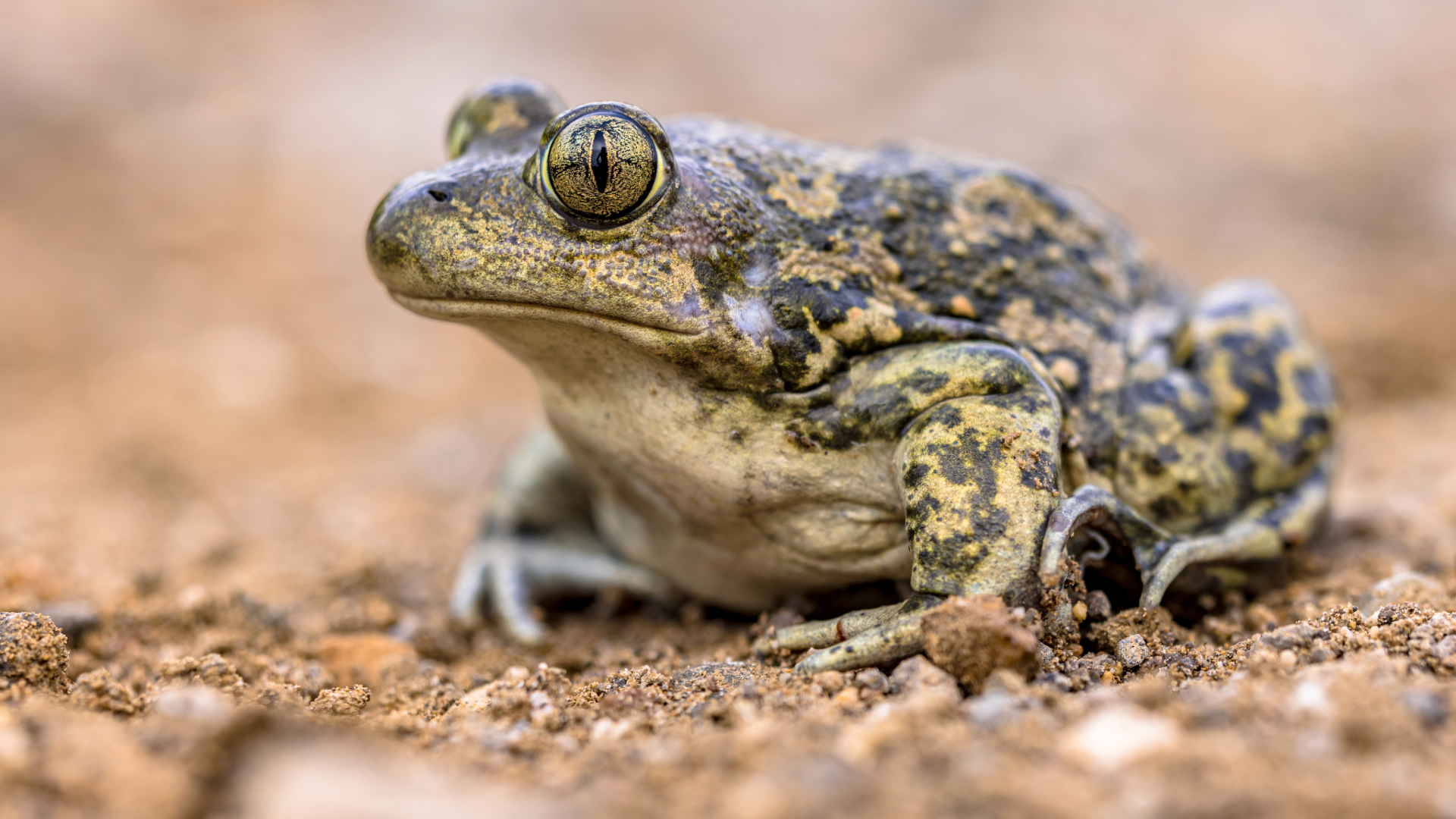
Eastern Spadefoot Toad
(Scaphiopus holbrookii)
Basic Information:
The Eastern Spadefoot Toad is a unique, burrowing amphibian native to the eastern United States, including much of the southeastern region such as Florida and up through parts of the Mid-Atlantic. Despite their name, they are more closely related to spadefoots than true toads and are known for the distinctive spade-like structures on their hind feet used for digging. Adults typically reach 1.5–3 inches in length.
They are primarily nocturnal and spend most of their lives buried underground, emerging during rainy conditions to feed and breed. Because of their fossorial lifestyle, they are rarely seen active, making them better suited as display animals for keepers who appreciate natural behaviors rather than interaction.
Lifespan:
5–10 years in captivity with proper care.
Sexing:
Sexing is difficult and typically determined by experienced keepers.
• Females are generally larger-bodied.
• Males may vocalize during breeding conditions.
Enclosure:
• Juveniles: 10-gallon enclosure minimum.
• Adults: 20-gallon long enclosure or larger.
Provide a ground-focused enclosure with deep substrate for burrowing. Include cork bark, leaf litter, and low-profile hides, though they will often remain buried.
Substrate:
A deep, loose substrate is essential to support natural burrowing behavior, such as:
• Organic topsoil
• Sand/topsoil mixes
• Coconut fiber blends
Substrate depth should be several inches to allow full burrowing.
Lighting & Temperature:
• Basking Spot: Not required
• Ambient Temperature: 70–78°F
• Cool Side: 65–72°F
• UVB Lighting: Not required but low-level UVB can be beneficial. Provide a 10–12 hour light cycle.
Avoid excessive heat, as these amphibians prefer cooler, stable conditions.
Humidity:
Maintain moderate humidity (50–70%), with slightly more moisture deeper in the substrate. The surface can remain a bit drier to mimic natural conditions.
Food:
Eastern Spadefoot Toads are insectivorous.
• Feed small insects such as crickets, roaches, and worms.
• Juveniles should be fed more frequently.
• Adults typically eat 2–3 times per week.
They are opportunistic feeders and respond strongly to movement.
Supplementation Schedule:
Calcium without D3: Dust food 3–4 times weekly.
Calcium with D3: Use once a week if adequate UVB lighting is provided.
Multivitamins with D3: Offer once monthly in place of the Calcium with D3 to support overall health.
Water:
Provide a shallow water dish with fresh, dechlorinated water at all times. These toads may soak occasionally but rely heavily on moisture within the substrate.
Eastern Spadefoot Toads are fascinating for keepers interested in natural, burrowing amphibians. Their unique adaptations and secretive lifestyle make them especially rewarding in well-designed, naturalistic enclosures.
Is There a Local Pet Store Selling Eastern Spadefoot Toads Near Me?
If you're in Washington County, Maryland, it’s just a short drive to Critters, Reptiles & Exotics in Frederick, where you can check availability of Eastern Spadefoot Toads and get expert advice on substrate depth, humidity, and proper care. Whether you're exploring native species or building a naturalistic setup, there’s always a new adventure waiting at Critters, Reptiles & Exotics!